
I stumbled on a simple trick for Homemade Pita Bread that makes the whole process far more approachable, so I wrote a clear step-by-step guide.
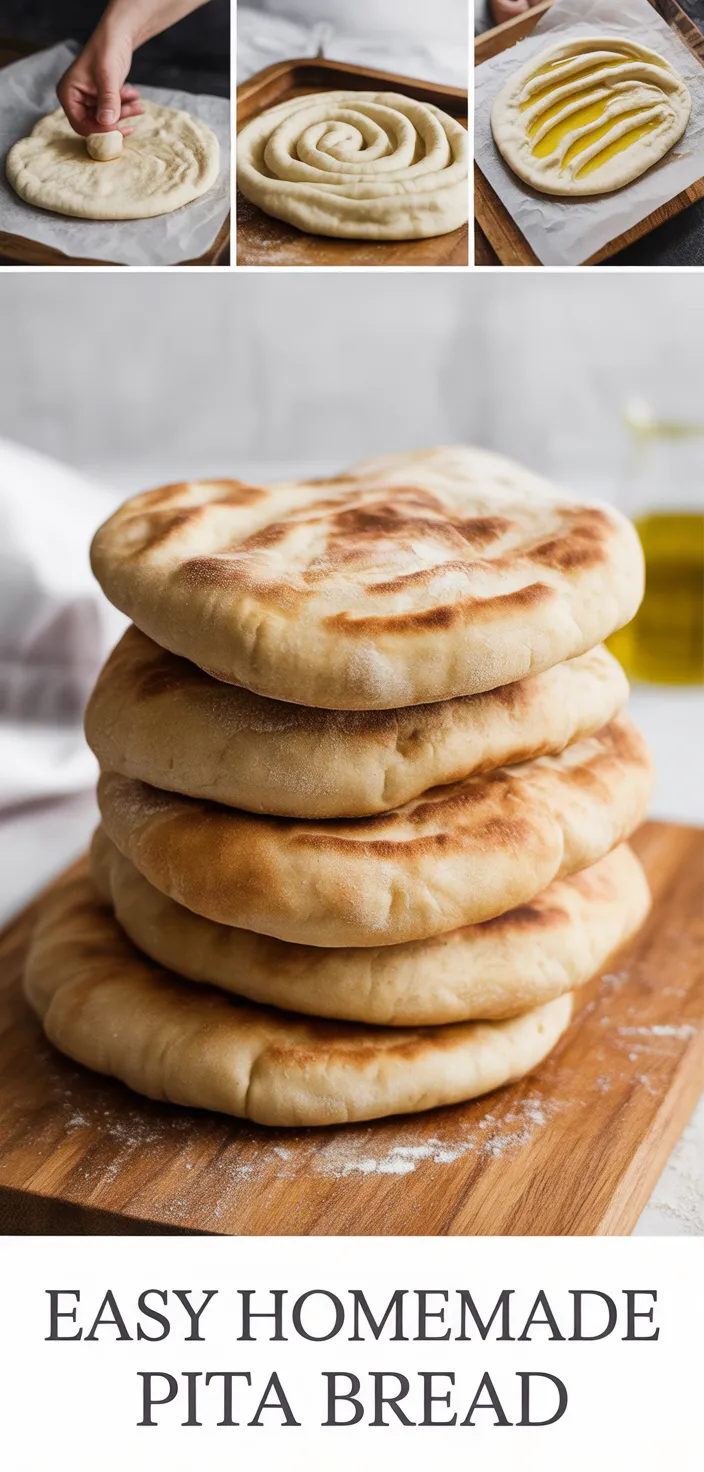
I used to think pita was one of those things you only buy pre-made, but after a few tries my Homemade Pita Bread changed that. With nothing fancier than all purpose flour and active dry yeast the dough does this weird, kind of addictive thing where it puffs into soft pockets.
You’ll be surprised how simple it really is, and honestly, once they start splitting open you won’t want the store bought kind anymore. This Pita Bread Recipe has a few easy tricks I swear by, stuff I learned the hard way and now never forget.
Try it, you might get hooked.
Ingredients
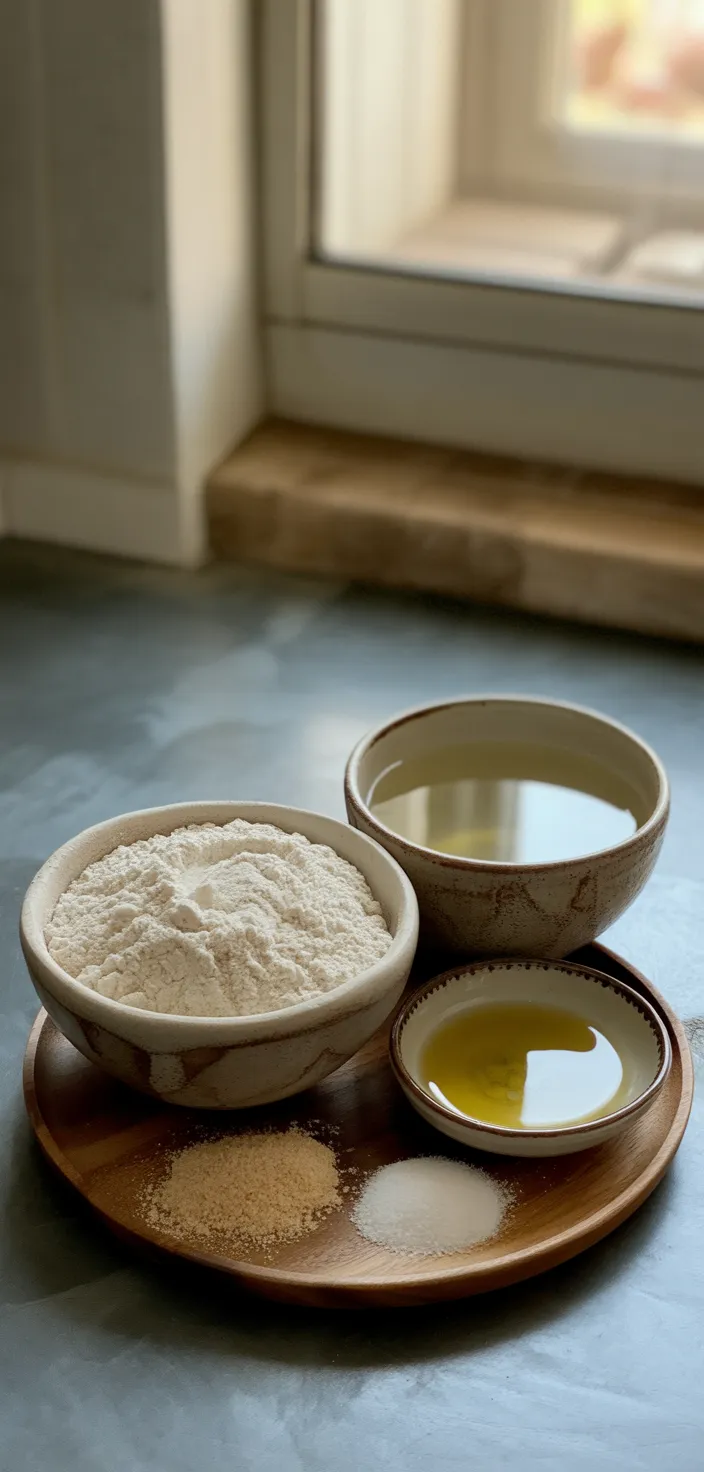
- All purpose flour: main source of carbs, some protein and little fiber, gives structure.
- Warm water: hydrates the dough, wakes the yeast up, no calories, just simple essential.
- Active dry yeast: ferments sugars, makes pockets of air, adds a faint tang.
- Sugar or honey: feeds the yeast, gives gentle sweetness and helps browning.
- Salt: boosts flavor, controls how fast dough rises, keeps things balanced.
- Olive oil: adds tenderness, a little richness, healthy fats if you use alot.
- Semolina or cornmeal: dusts the peel, prevents sticking, gives a nice crunch.
Ingredient Quantities
- 3 cups (360 g) all purpose flour, plus extra for dusting
- 1 1/4 cups (300 ml) warm water
- 2 1/4 teaspoons active dry yeast (1 packet)
- 1 tablespoon granulated sugar or honey
- 1 1/2 teaspoons fine salt
- 1 tablespoon olive oil, optional
- Extra semolina or cornmeal for dusting, optional
How to Make this
1. Pour 1 1/4 cups (300 ml) warm water, 2 1/4 tsp active dry yeast and 1 tbsp sugar or honey into a bowl, stir gently and let sit 5 to 10 minutes until foamy; if it never foams your water was too hot or yeast is dead so try again.
2. In a large bowl mix 3 cups (360 g) all purpose flour with 1 1/2 tsp fine salt, make a well and pour in the foamy yeast mix plus 1 tbsp olive oil if using, stir with a wooden spoon until a shaggy dough forms.
3. Turn dough onto a lightly floured surface and knead about 8 to 10 minutes until smooth and elastic, or use a stand mixer with a dough hook on medium for 6 to 8 minutes; it should be slightly tacky but not sticky.
4. Lightly oil a clean bowl, place the dough inside, cover with plastic wrap or a damp towel, and let rise in a warm spot 1 to 1 1/2 hours until roughly doubled; dont rush this step, flavor and puff depend on it.
5. Punch the dough down, divide into 8 to 10 equal pieces (about golf ball size for smaller pitas or slightly larger for pocket pitas), shape each into a tight ball and cover again; let rest 10 to 30 minutes so the gluten relaxes and they roll out easier.
6. Meanwhile preheat your oven as hot as it will go, 475 to 500°F (245 to 260°C), and place a baking stone or an inverted heavy baking sheet on the middle rack for at least 30 minutes so it is searing hot.
7. On a lightly floured surface or dusted with semolina/cornmeal, roll each ball into a circle about 1/8 to 1/4 inch thick, try to keep them even thickness so they puff uniformly; dont stack rolled rounds or they’ll stick.
8. Slide 2 to 4 rounds (depending on oven size) onto the hot stone or sheet and bake 1 1/2 to 3 minutes until they puff up and get faint brown spots; flip once if you want both sides evenly browned, but puffing is the goal.
9. Transfer baked pitas to a clean towel and cover to steam and stay soft, repeat with remaining dough; if a pita doesnt puff, no big deal, it will still taste great and you can reheat flattened pitas quickly on a hot pan to make them pliable.
Equipment Needed
1. Large mixing bowl for the dough
2. Small bowl or liquid measuring cup to proof the yeast and warm the water
3. Measuring cups and measuring spoons, plus a kitchen scale for more exact flour weights
4. Wooden spoon or sturdy spatula to stir the shaggy dough
5. Stand mixer with dough hook if you dont wanna knead by hand, otherwise be ready to knead on the counter
6. Rolling pin and a bench scraper to divide and shape the balls
7. Baking stone or an inverted heavy baking sheet and a peel or thin spatula to slide rounds onto the hot surface
8. Clean kitchen towel to steam the pitas and oven mitts to handle hot pans
FAQ
Easy Homemade Pita Bread Recipe Substitutions and Variations
- All‑purpose flour: swap for bread flour (use the same 3 cups) for a chewier, puffier pocket. Or replace up to half with whole wheat (example: 1 1/2 cups whole wheat + 1 1/2 cups AP), but it’ll be denser so add about 1 to 2 tablespoons extra water per cup whole wheat.
- Active dry yeast: use instant (rapid‑rise) yeast at about 1 3/4 teaspoons instead of 2 1/4 teaspoons; instant can be mixed straight into the flour, no proofing needed. As a sourdough option, use ~1/2 cup active starter, reduce water and flour a bit and allow much longer fermentation.
- Sugar or honey: swap with maple syrup or agave, same 1 tablespoon amount, or omit sweetener entirely and let the dough rise a little longer (yeast will still work but slower).
- Olive oil: substitute a neutral oil like canola or sunflower, or use melted butter for richer flavor, same 1 tablespoon. You can also skip the oil if you want, the dough will just be slightly less tender.
Pro Tips
1) Test your water temp with a thermometer or your wrist, if it feels too hot it will kill the yeast and nothing will happen, too cool and it will take forever to rise. If the starter never foams after 10 minutes toss it and start over, dont try to salvage it.
2) Get the baking surface screaming hot, like really hot, and give it extra time to heat up. A cast iron pan or pizza steel will puff pitas even better than a thin sheet. Also use the oven rack a little higher so the top heat helps them balloon.
3) Roll each round evenly and thin, about one eighth to one quarter inch, and dust with semolina or cornmeal instead of flour so they slide and dont stick. If they resist stretching let them rest a few more minutes, the gluten will relax and they roll out way easier.
4) Right after baking stack the pitas and cover them with a clean towel to trap steam so they stay soft and pliable, if one doesnt puff you can flatten and quickly reheat it on a hot pan to make it flexible again.
5) For storage freeze flat between sheets of parchment so they dont stick, to reheat warm in a hot skillet or oven, dont microwave long or they get rubbery. If you want more flavor let the dough rise a bit longer at a cool room temp, it develops better taste.
Easy Homemade Pita Bread Recipe
I stumbled on a simple trick for Homemade Pita Bread that makes the whole process far more approachable, so I wrote a clear step-by-step guide.
8
servings
185
kcal
Equipment: 1. Large mixing bowl for the dough
2. Small bowl or liquid measuring cup to proof the yeast and warm the water
3. Measuring cups and measuring spoons, plus a kitchen scale for more exact flour weights
4. Wooden spoon or sturdy spatula to stir the shaggy dough
5. Stand mixer with dough hook if you dont wanna knead by hand, otherwise be ready to knead on the counter
6. Rolling pin and a bench scraper to divide and shape the balls
7. Baking stone or an inverted heavy baking sheet and a peel or thin spatula to slide rounds onto the hot surface
8. Clean kitchen towel to steam the pitas and oven mitts to handle hot pans
Ingredients
-
3 cups (360 g) all purpose flour, plus extra for dusting
-
1 1/4 cups (300 ml) warm water
-
2 1/4 teaspoons active dry yeast (1 packet)
-
1 tablespoon granulated sugar or honey
-
1 1/2 teaspoons fine salt
-
1 tablespoon olive oil, optional
-
Extra semolina or cornmeal for dusting, optional
Directions
- Pour 1 1/4 cups (300 ml) warm water, 2 1/4 tsp active dry yeast and 1 tbsp sugar or honey into a bowl, stir gently and let sit 5 to 10 minutes until foamy; if it never foams your water was too hot or yeast is dead so try again.
- In a large bowl mix 3 cups (360 g) all purpose flour with 1 1/2 tsp fine salt, make a well and pour in the foamy yeast mix plus 1 tbsp olive oil if using, stir with a wooden spoon until a shaggy dough forms.
- Turn dough onto a lightly floured surface and knead about 8 to 10 minutes until smooth and elastic, or use a stand mixer with a dough hook on medium for 6 to 8 minutes; it should be slightly tacky but not sticky.
- Lightly oil a clean bowl, place the dough inside, cover with plastic wrap or a damp towel, and let rise in a warm spot 1 to 1 1/2 hours until roughly doubled; dont rush this step, flavor and puff depend on it.
- Punch the dough down, divide into 8 to 10 equal pieces (about golf ball size for smaller pitas or slightly larger for pocket pitas), shape each into a tight ball and cover again; let rest 10 to 30 minutes so the gluten relaxes and they roll out easier.
- Meanwhile preheat your oven as hot as it will go, 475 to 500°F (245 to 260°C), and place a baking stone or an inverted heavy baking sheet on the middle rack for at least 30 minutes so it is searing hot.
- On a lightly floured surface or dusted with semolina/cornmeal, roll each ball into a circle about 1/8 to 1/4 inch thick, try to keep them even thickness so they puff uniformly; dont stack rolled rounds or they’ll stick.
- Slide 2 to 4 rounds (depending on oven size) onto the hot stone or sheet and bake 1 1/2 to 3 minutes until they puff up and get faint brown spots; flip once if you want both sides evenly browned, but puffing is the goal.
- Transfer baked pitas to a clean towel and cover to steam and stay soft, repeat with remaining dough; if a pita doesnt puff, no big deal, it will still taste great and you can reheat flattened pitas quickly on a hot pan to make them pliable.
Notes
- Below you’ll find my best estimate of this recipe’s nutrition facts. Treat the numbers as a guide rather than a rule—great food should nourish both body and spirit. Figures are approximate, and the website owner assumes no liability for any inaccuracies in this recipe.
Nutrition Facts
- Serving Size: 86.9g
- Total number of serves: 8
- Calories: 185kcal
- Fat: 2.14g
- Saturated Fat: 0.29g
- Trans Fat: 0g
- Polyunsaturated: 0.29g
- Monounsaturated: 1.15g
- Cholesterol: 0mg
- Sodium: 443mg
- Potassium: 48mg
- Carbohydrates: 35.76g
- Fiber: 1.21g
- Sugar: 1.56g
- Protein: 4.5g
- Vitamin A: 0IU
- Vitamin C: 0mg
- Calcium: 6.75mg
- Iron: 1.8mg