
I finally nailed a Farmhouse Loaf that’s crusty on the outside, buttery soft inside, and will make you dump the store-bought stuff.
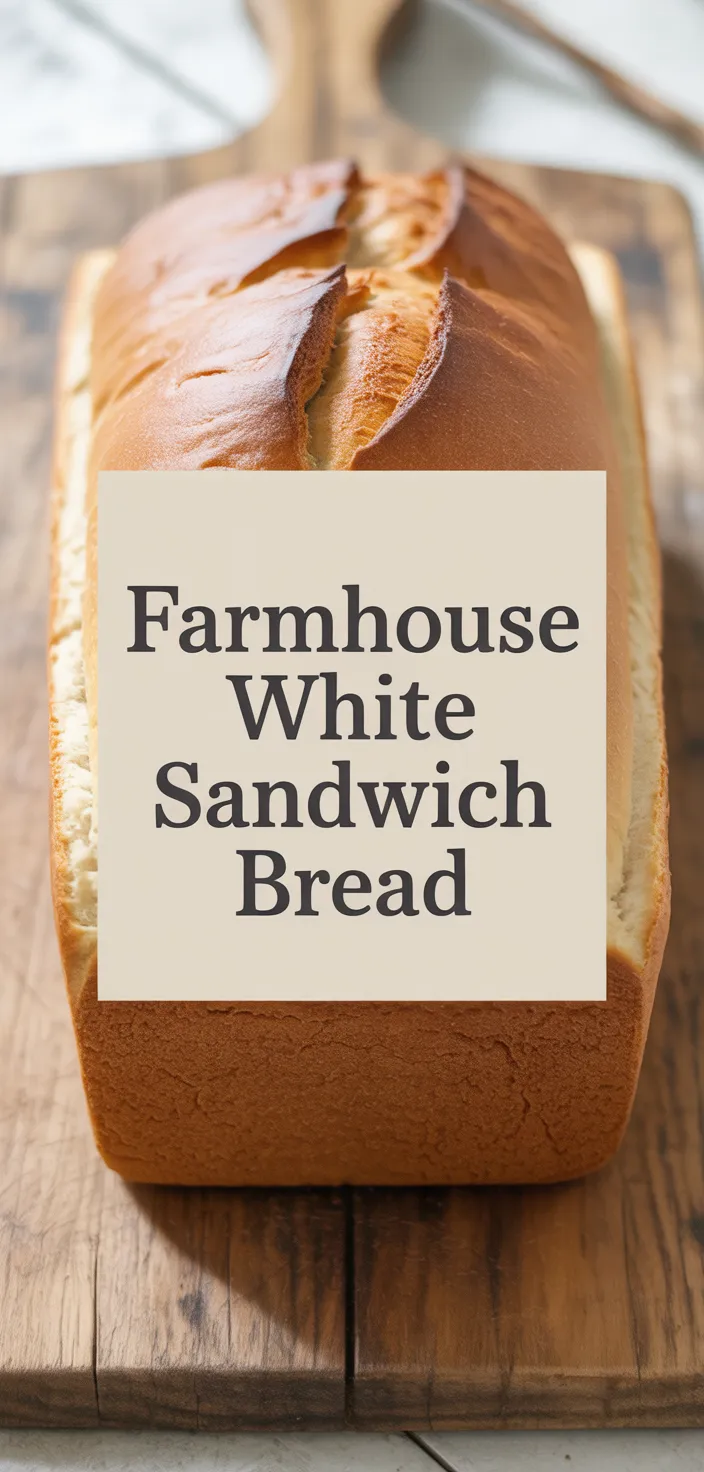
I’m obsessed with this farmhouse white sandwich bread because it’s the kind of loaf that actually does what you want: crusty outside, buttery soft inside. I love how it makes the perfect sandwich bread for anything from grilled cheese to turkey, and how mornings are suddenly better with a thick slice of bread for toast smeared with butter.
I always use bread flour and a little unsalted butter because they give the crumb that pillowy, chewy thing I want. No fuss, just a loaf that disappears fast.
I eat the crust first. Don’t judge.
Worth the crumbs. Every single time.
Ingredients
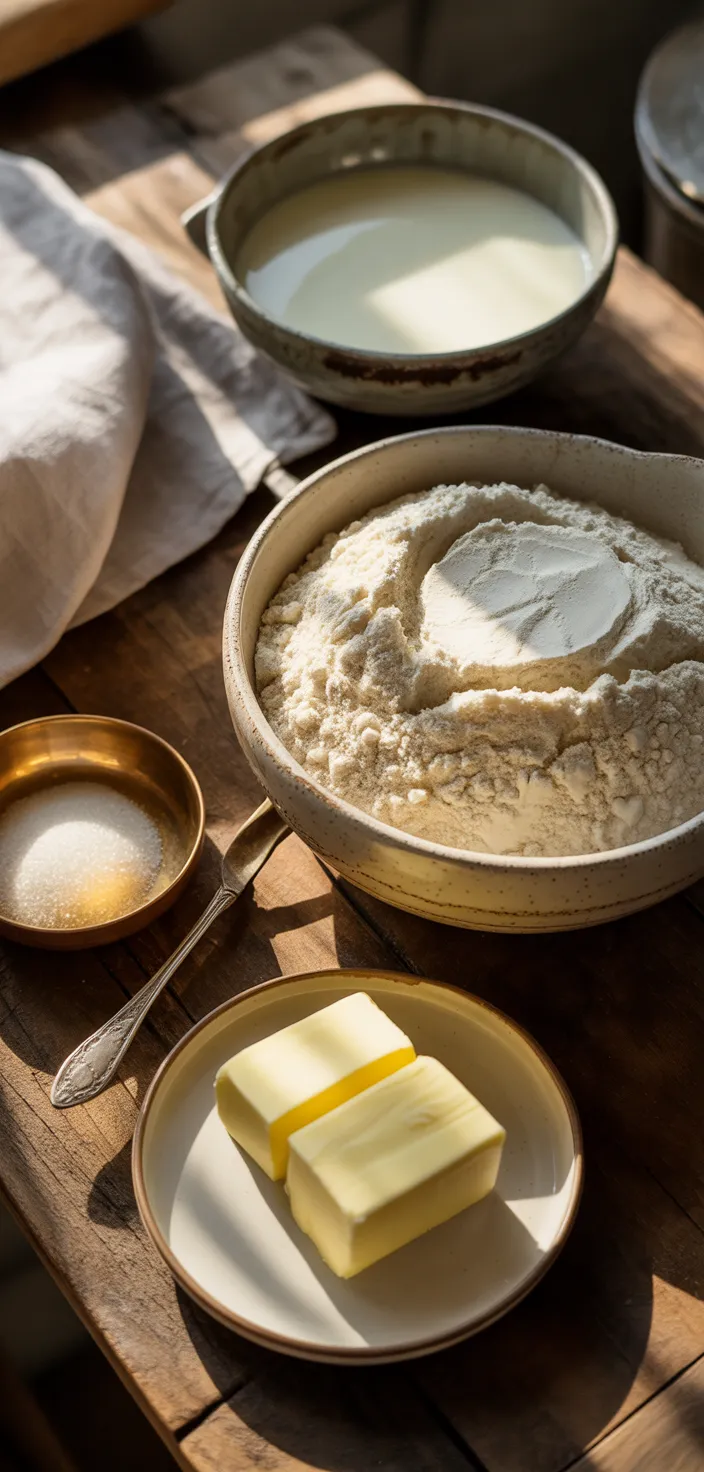
- Bread flour gives structure and chew, it’s what makes the slice hold together.
- Whole milk adds richness and softer crumb, basically makes it taste homier.
- Warm water wakes the yeast and keeps the dough flexible, simple and needed.
- Sugar feeds the yeast and gives a touch of sweetness, not cloying.
- Yeast is the tiny life that makes rise happen, you’ll love the texture.
- Sea salt balances flavor and tightens gluten, basically keeps it from tasting flat.
- Unsalted butter brings tender crumbs and buttery notes; brush on top for sheen.
- Egg makes it richer and softer, plus it helps brown the crust nicely.
Ingredient Quantities
- 3 1/2 to 4 cups (450 to 500 g) bread flour, plus extra for dusting
- 1 cup (240 ml) whole milk, warmed to about 110°F
- 1/2 cup (120 ml) warm water, about 110°F
- 2 tablespoons granulated sugar
- 2 1/4 teaspoons (1 packet) active dry yeast
- 1 1/2 teaspoons fine sea salt
- 2 tablespoons unsalted butter, melted, plus extra for brushing the loaf
- 1 large egg, at room temperature (optional, for a richer softer crumb)
How to Make this
1. Warm the milk and water to about 110°F, sprinkle the yeast and sugar over the warm water, let sit 5 to 10 minutes until foamy; if it never foams your yeast might be dead and start over.
2. In a large bowl whisk together 3 1/2 cups bread flour and the salt, make a well and pour in the foamy yeast mixture, warmed milk, melted butter, and the egg if using; stir with a wooden spoon until a shaggy dough forms.
3. Turn the dough out onto a lightly floured surface, add remaining flour a little at a time as needed and knead about 8 to 10 minutes until smooth and elastic but slightly tacky; you want a dough that holds shape but is not stiff.
4. Shape into a ball, oil the same bowl lightly and put the dough back in, cover with plastic wrap or a damp towel and let rise in a warm spot until doubled, about 1 to 1 1/2 hours.
5. Gently deflate the dough with your fist, turn it out, let it rest 5 minutes so the gluten loosens and it’s easier to shape.
6. Flatten to a rectangle about the width of your loaf pan, roll tightly into a log, pinch seam closed and tuck the ends under so it fits a greased 9×5 inch loaf pan neatly.
7. Cover the pan loosely and let rise again until the dough is about 1 inch above the rim and noticeably puffy, 45 to 60 minutes; preheat oven to 350°F during the last 20 minutes of proofing.
8. Optional: slash the top with a sharp knife or lame for a rustic look, brush the top with a little milk or melted butter for color, then bake in the center of the oven 30 to 35 minutes until golden brown and an instant read thermometer reads about 190°F in the center.
9. Remove the loaf from the pan onto a rack and brush immediately with more melted butter for a soft crust, let cool at least 30 minutes before slicing so it doesn’t squash.
10. Store wrapped at room temperature for 2 to 3 days or freeze slices for longer; to revive slightly stale slices warm in a toaster or oven with a pat of butter.
Equipment Needed
1. Measuring cups and spoons (or a kitchen scale for accuracy)
2. Large mixing bowl
3. Wooden spoon or sturdy silicone spatula for mixing
4. Bench scraper or dough scraper for turning and shaping dough
5. Lightly floured work surface and a small bowl for extra flour
6. 9×5 inch loaf pan, greased
7. Instant read thermometer to check the 190°F center
8. Plastic wrap or a damp kitchen towel for rising
9. Pastry brush and a sharp knife or lame for brushing and slashing the top
FAQ
Farmhouse White Sandwich Bread Recipe Substitutions and Variations
- Bread flour (3 1/2 to 4 cups): use all purpose flour plus 1 to 2 tablespoons vital wheat gluten per cup for similar chew, or use straight all purpose flour but expect a slightly softer, less chewy crumb, or try 50 50 whole wheat and all purpose but add an extra 2 to 4 tablespoons water cause whole wheat soaks more.
- Whole milk (1 cup): swap for 1 cup buttermilk for tang and tender crumb, or use 1 cup milk + 1 tablespoon powdered milk to boost protein if your milk is low fat, or use unsweetened soy milk for a dairy free option (same temp).
- Unsalted butter (2 tbsp): replace with equal olive oil or vegetable oil for moistness and a taller loaf, or use soft margarine if you need dairy free, or use melted coconut oil but note a faint coconut flavor may appear.
- Active dry yeast (2 1/4 tsp): use instant yeast (use about 2 teaspoons instead, mix straight into flour), or use fresh yeast at 3 times the weight (so about 2 1/4 teaspoons active dry = ~7 g fresh), or if you have no yeast try a risen batter using sourdough starter but expect longer fermentation and a slightly different flavor.
Pro Tips
– let the yeast tell you if it’s alive. if the water doesnt get foamy in 10 minutes toss the yeast and try again, dont just keep going. also, use water and milk about the same warm temp so one doesnt kill the yeast.
– when kneading aim for “slightly tacky” not sticky goo or a stiff brick. test by poking the dough with your finger if it slowly springs back it’s good. if it tears instead it needs more kneading or a touch more water, add flour sparingly.
– proof in a warm, draft free spot like an oven with the light on or on top of the fridge. if your kitchen is cold, put a pan of hot water in the oven to create humidity, that stops the crust forming too soon and gives a softer loaf.
– don’t cut into it hot even if it smells irresistible, the crumb needs those 30 minutes to set or you’ll get a gummy mess. brush with butter right away though for a softer crust and nicer flavor.
Farmhouse White Sandwich Bread Recipe
I finally nailed a Farmhouse Loaf that's crusty on the outside, buttery soft inside, and will make you dump the store-bought stuff.
12
servings
187
kcal
Equipment: 1. Measuring cups and spoons (or a kitchen scale for accuracy)
2. Large mixing bowl
3. Wooden spoon or sturdy silicone spatula for mixing
4. Bench scraper or dough scraper for turning and shaping dough
5. Lightly floured work surface and a small bowl for extra flour
6. 9×5 inch loaf pan, greased
7. Instant read thermometer to check the 190°F center
8. Plastic wrap or a damp kitchen towel for rising
9. Pastry brush and a sharp knife or lame for brushing and slashing the top
Ingredients
-
3 1/2 to 4 cups (450 to 500 g) bread flour, plus extra for dusting
-
1 cup (240 ml) whole milk, warmed to about 110°F
-
1/2 cup (120 ml) warm water, about 110°F
-
2 tablespoons granulated sugar
-
2 1/4 teaspoons (1 packet) active dry yeast
-
1 1/2 teaspoons fine sea salt
-
2 tablespoons unsalted butter, melted, plus extra for brushing the loaf
-
1 large egg, at room temperature (optional, for a richer softer crumb)
Directions
- Warm the milk and water to about 110°F, sprinkle the yeast and sugar over the warm water, let sit 5 to 10 minutes until foamy; if it never foams your yeast might be dead and start over.
- In a large bowl whisk together 3 1/2 cups bread flour and the salt, make a well and pour in the foamy yeast mixture, warmed milk, melted butter, and the egg if using; stir with a wooden spoon until a shaggy dough forms.
- Turn the dough out onto a lightly floured surface, add remaining flour a little at a time as needed and knead about 8 to 10 minutes until smooth and elastic but slightly tacky; you want a dough that holds shape but is not stiff.
- Shape into a ball, oil the same bowl lightly and put the dough back in, cover with plastic wrap or a damp towel and let rise in a warm spot until doubled, about 1 to 1 1/2 hours.
- Gently deflate the dough with your fist, turn it out, let it rest 5 minutes so the gluten loosens and it’s easier to shape.
- Flatten to a rectangle about the width of your loaf pan, roll tightly into a log, pinch seam closed and tuck the ends under so it fits a greased 9×5 inch loaf pan neatly.
- Cover the pan loosely and let rise again until the dough is about 1 inch above the rim and noticeably puffy, 45 to 60 minutes; preheat oven to 350°F during the last 20 minutes of proofing.
- Optional: slash the top with a sharp knife or lame for a rustic look, brush the top with a little milk or melted butter for color, then bake in the center of the oven 30 to 35 minutes until golden brown and an instant read thermometer reads about 190°F in the center.
- Remove the loaf from the pan onto a rack and brush immediately with more melted butter for a soft crust, let cool at least 30 minutes before slicing so it doesn’t squash.
- Store wrapped at room temperature for 2 to 3 days or freeze slices for longer; to revive slightly stale slices warm in a toaster or oven with a pat of butter.
Notes
- Below you’ll find my best estimate of this recipe’s nutrition facts. Treat the numbers as a guide rather than a rule—great food should nourish both body and spirit. Figures are approximate, and the website owner assumes no liability for any inaccuracies in this recipe.
Nutrition Facts
- Serving Size: 78.2g
- Total number of serves: 12
- Calories: 187kcal
- Fat: 3.6g
- Saturated Fat: 1.8g
- Trans Fat: 0.1g
- Polyunsaturated: 0.1g
- Monounsaturated: 1g
- Cholesterol: 22.6mg
- Sodium: 313.5mg
- Potassium: 195.8mg
- Carbohydrates: 33.2g
- Fiber: 1.4g
- Sugar: 3.1g
- Protein: 5.3g
- Vitamin A: 122.5IU
- Vitamin C: 0mg
- Calcium: 33.3mg
- Iron: 1.9mg