
I finally found the buttermilk biscuit formula worth bragging about: towering, tender, flaky, and reliable every single time. These are the Southern biscuits I’d put up against any batch, anywhere.
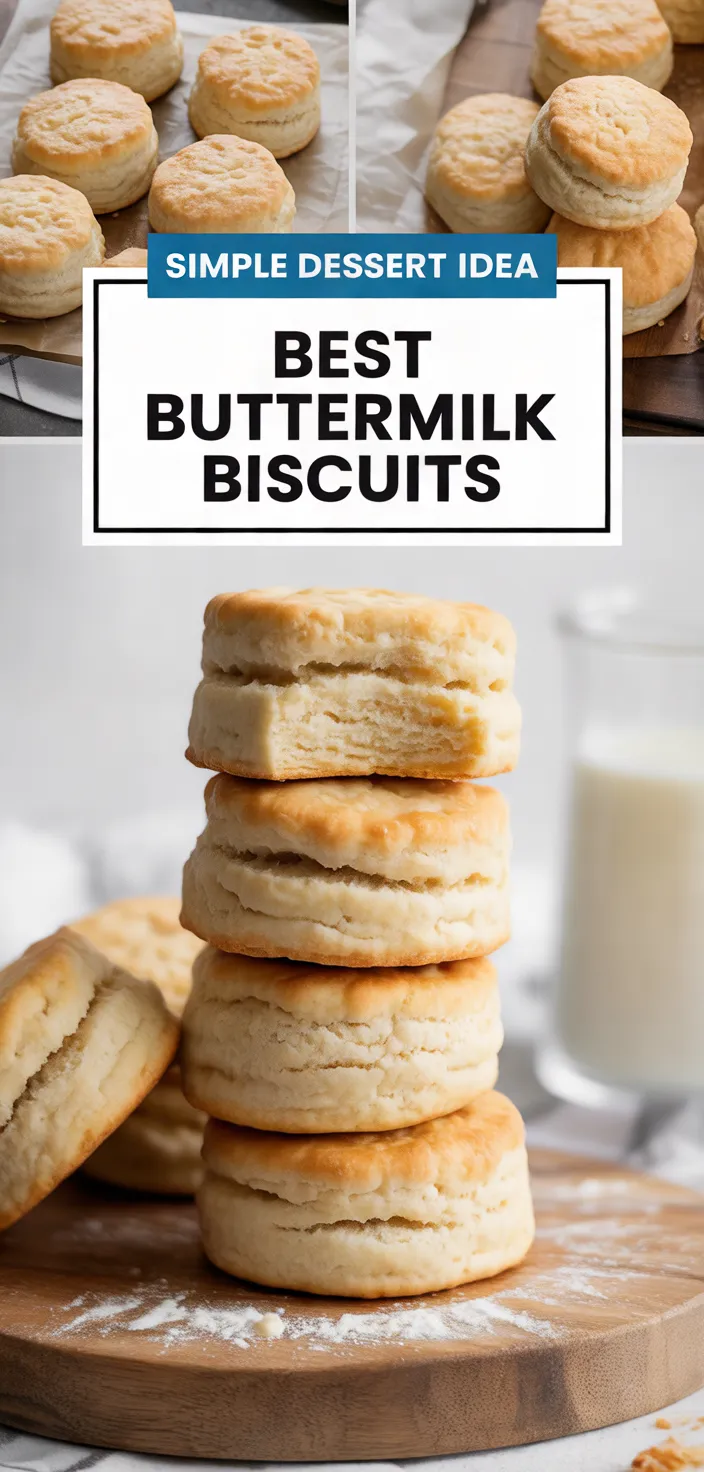
I’m obsessed with these buttermilk biscuits because they hit that rare spot between tall, flaky, and shamelessly buttery without acting fancy about it. I want craggy tops, tender middles, and edges that split open like they’ve been begging for jam, gravy, or just another swipe of butter.
The cold buttermilk brings that sharp little tang I crave, and cold unsalted butter keeps every bite rich instead of heavy. And honestly, I don’t need a special occasion.
Breakfast, dinner, standing at the counter. These biscuits earn their hype.
But the best part? I keep reaching for one more every single time.
Ingredients
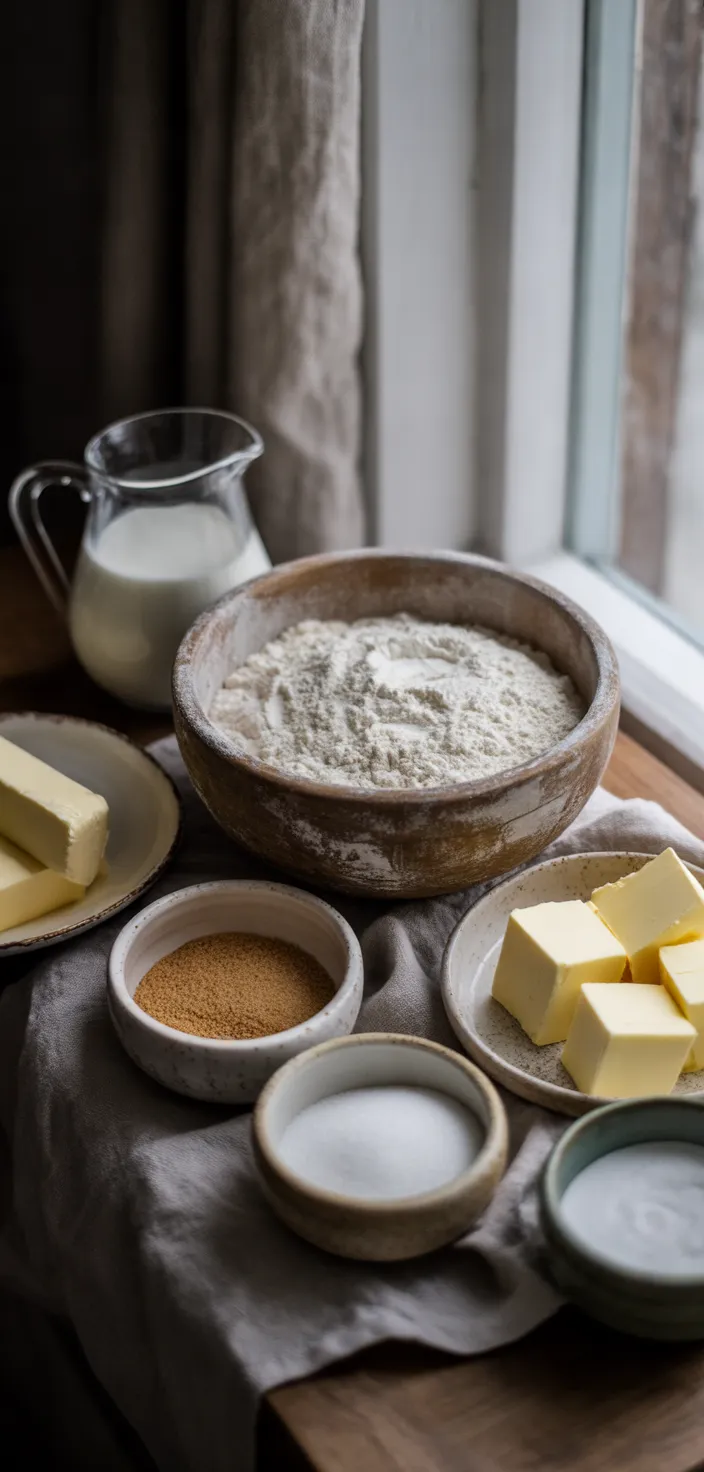
- All-purpose flour gives the biscuits their soft, sturdy base.
Nothing fancy, just dependable.
- Baking powder brings the big lift, so you get tall, fluffy layers.
- Baking soda helps with browning and that classic buttermilk biscuit tang.
- Sugar adds a tiny sweetness, not dessert-level, just nicely balanced.
- Fine salt wakes everything up.
Without it, biscuits taste flat.
- Cold butter makes those tender, flaky pockets everyone fights over.
- Vegetable shortening keeps the crumb extra soft.
Basically, it’s biscuit insurance.
- Cold buttermilk adds tang, tenderness, and that cozy homemade flavor.
- Plus, melted butter on top gives shine, richness, and a little bakery-style charm.
Ingredient Quantities
- 3 cups all purpose flour
- 1 tablespoon baking powder
- 1 teaspoon baking soda
- 1 tablespoon granulated sugar
- 1 teaspoon fine salt
- 1/2 cup cold unsalted butter cut into pieces
- 1/4 cup cold vegetable shortening
- 1 1/4 to 1 1/2 cups cold buttermilk
- 2 tablespoons melted butter for brushing, optional
How to Make this
1. Preheat oven to 450°F and position a rack in the center; line a baking sheet or prep a cast iron skillet.
2. In a large bowl whisk together 3 cups all purpose flour, 1 tablespoon baking powder, 1 teaspoon baking soda, 1 tablespoon granulated sugar, and 1 teaspoon fine salt.
3. Add 1/2 cup cold unsalted butter cut into pieces and 1/4 cup cold vegetable shortening to the dry mixture; cut or rub them in with a pastry cutter or two forks until the mixture resembles coarse crumbs with some pea sized pieces.
4. Make a well in the center and pour in 1 1/4 cups cold buttermilk; stir gently with a fork until the dough just comes together, adding up to 1/4 cup more buttermilk if the dough is too dry.
5. Turn the dough out onto a lightly floured surface and gently fold it over itself 3 to 4 times to create layers; do not overwork.
6. Pat or roll the dough to a thickness of about 3/4 to 1 inch; press straight down with a 2 1/2 to 3 inch biscuit cutter without twisting to preserve rise.
7. Place biscuits close together on the prepared baking sheet for taller biscuits or spaced apart for crisper sides.
8. Bake 12 to 15 minutes until the tops are golden brown and the centers are cooked through.
9. Remove from oven and, if desired, brush the tops with 2 tablespoons melted butter for added flavor and shine.
10. Cool briefly on a rack and serve warm.
Equipment Needed
1. Oven and baking sheet or cast iron skillet
2. Large mixing bowl
3. Whisk
4. Pastry cutter or two forks
5. Measuring cups and spoons
6. Lightly floured surface and bench scraper or spatula
7. 2 1/2 to 3 inch biscuit cutter
8. Pastry brush and wire cooling rack
FAQ
How To Make The World’s Best Buttermilk Biscuits Recipe Substitutions and Variations
- All purpose flour: Use 100 percent pastry flour for a more tender biscuit, or substitute half whole wheat pastry flour and half all purpose to add nuttiness; if using whole wheat, increase buttermilk by 1 to 2 tablespoons for moisture.
- Cold unsalted butter: Swap with equal amount cold cultured butter for richer flavor, or use chilled ghee cut into small pieces for a slightly nutty, longer shelf life (note ghee melts faster so keep very cold).
- Cold vegetable shortening: Replace with additional cold butter (1 to 1) for flavor, or use solid coconut oil measured 1 to 1 for a flaky texture and subtle sweetness; if using coconut oil, ensure it is fully solid and cold.
- Cold buttermilk: Make 1 1/4 to 1 1/2 cups by mixing 1 tablespoon white vinegar or lemon juice into 1 1/4 cups milk and letting sit 5 minutes, or use plain full fat yogurt thinned with milk to the same consistency for a richer biscuit.
Pro Tips
1. Keep everything cold. Cold butter and shortening create steam pockets that give lift and flaky layers, so work quickly and chill the dough or pan for 10 minutes if your kitchen feels warm.
2. Measure flour by weight or use the spoon-and-level method. Too much flour makes dense biscuits, so err on the slightly sticky side when the dough first comes together.
3. Be gentle with folding and cutting. Fold only a few times to build layers, and press the cutter straight down without twisting to preserve the rise.
4. Bake on a preheated heavy sheet or cast iron for better oven spring, and brush with melted butter right out of the oven for extra flavor and a beautiful sheen.
How To Make The World's Best Buttermilk Biscuits Recipe
I finally found the buttermilk biscuit formula worth bragging about: towering, tender, flaky, and reliable every single time. These are the Southern biscuits I’d put up against any batch, anywhere.
8
servings
375
kcal
Equipment: 1. Oven and baking sheet or cast iron skillet
2. Large mixing bowl
3. Whisk
4. Pastry cutter or two forks
5. Measuring cups and spoons
6. Lightly floured surface and bench scraper or spatula
7. 2 1/2 to 3 inch biscuit cutter
8. Pastry brush and wire cooling rack
Ingredients
-
3 cups all purpose flour
-
1 tablespoon baking powder
-
1 teaspoon baking soda
-
1 tablespoon granulated sugar
-
1 teaspoon fine salt
-
1/2 cup cold unsalted butter cut into pieces
-
1/4 cup cold vegetable shortening
-
1 1/4 to 1 1/2 cups cold buttermilk
-
2 tablespoons melted butter for brushing, optional
Directions
- Preheat oven to 450°F and position a rack in the center; line a baking sheet or prep a cast iron skillet.
- In a large bowl whisk together 3 cups all purpose flour, 1 tablespoon baking powder, 1 teaspoon baking soda, 1 tablespoon granulated sugar, and 1 teaspoon fine salt.
- Add 1/2 cup cold unsalted butter cut into pieces and 1/4 cup cold vegetable shortening to the dry mixture; cut or rub them in with a pastry cutter or two forks until the mixture resembles coarse crumbs with some pea sized pieces.
- Make a well in the center and pour in 1 1/4 cups cold buttermilk; stir gently with a fork until the dough just comes together, adding up to 1/4 cup more buttermilk if the dough is too dry.
- Turn the dough out onto a lightly floured surface and gently fold it over itself 3 to 4 times to create layers; do not overwork.
- Pat or roll the dough to a thickness of about 3/4 to 1 inch; press straight down with a 2 1/2 to 3 inch biscuit cutter without twisting to preserve rise.
- Place biscuits close together on the prepared baking sheet for taller biscuits or spaced apart for crisper sides.
- Bake 12 to 15 minutes until the tops are golden brown and the centers are cooked through.
- Remove from oven and, if desired, brush the tops with 2 tablespoons melted butter for added flavor and shine.
- Cool briefly on a rack and serve warm.
Notes
- Below you’ll find my best estimate of this recipe’s nutrition facts. Treat the numbers as a guide rather than a rule—great food should nourish both body and spirit. Figures are approximate, and the website owner assumes no liability for any inaccuracies in this recipe.
Nutrition Facts
- Serving Size: 115g
- Total number of serves: 8
- Calories: 375kcal
- Fat: 22.7g
- Saturated Fat: 11.2g
- Trans Fat: 0.6g
- Polyunsaturated: 2.1g
- Monounsaturated: 6.1g
- Cholesterol: 42mg
- Sodium: 680mg
- Potassium: 114mg
- Carbohydrates: 37.8g
- Fiber: 1.2g
- Sugar: 3.5g
- Protein: 6.1g
- Vitamin A: 455IU
- Vitamin C: 0mg
- Calcium: 56mg
- Iron: 0.6mg