
There’s something almost magical about transforming simple ingredients like flour, sugar, and yeast into warm, fluffy rolls that fill your home with the most comforting aroma. Buckle up, because today I’m diving into the art of making these little clouds of joy that are perfect for any occasion!

My warm and freshly baked soft dinner rolls are incomparable. They are crafted with just the right amount of all-purpose flour and a whisper of sweetness from granulated sugar.
Their fluffy texture comes from active dry yeast, and a hint of richness from melted butter and a fresh egg. I can’t imagine serving them any other way than warm and with just a little extra brushed-on butter to make them shine.
Ingredients
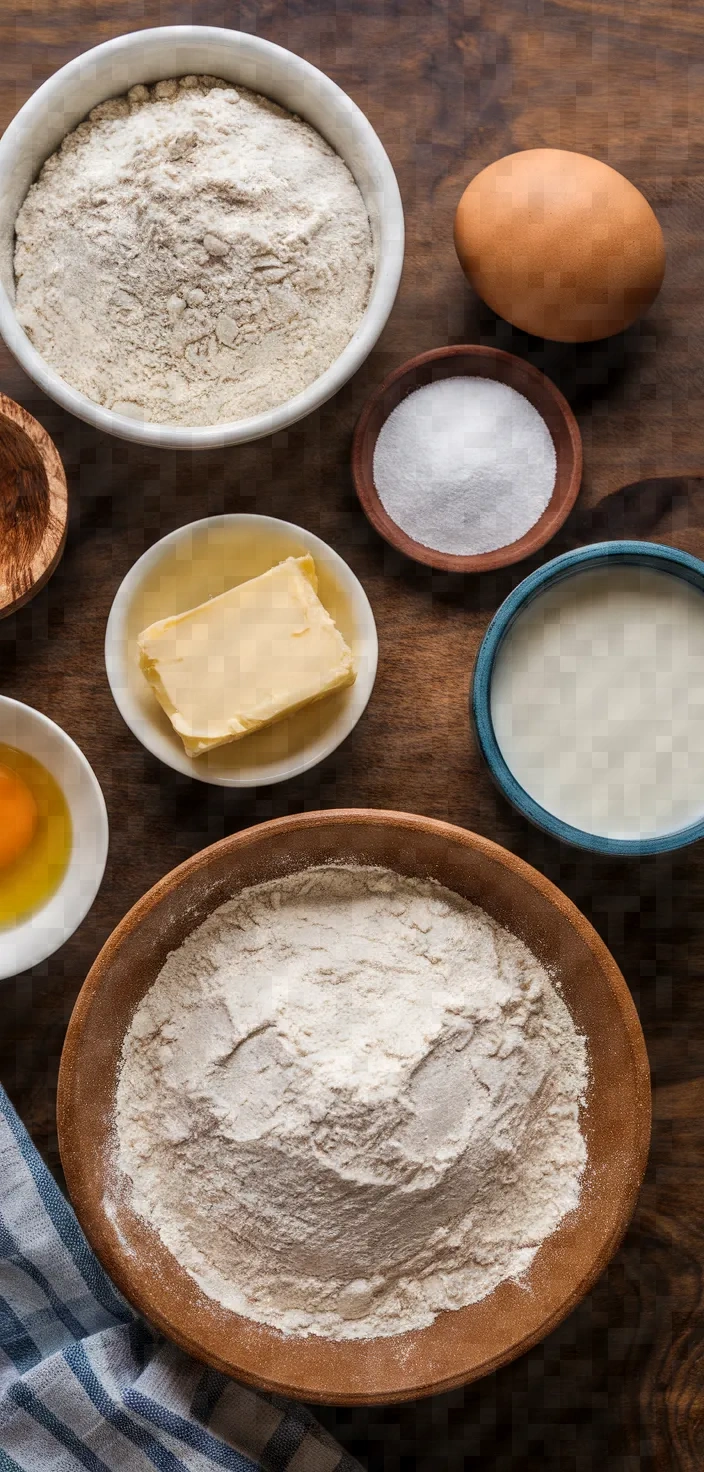
- All-purpose flour: Provides structure; rich in carbohydrates.
- Granulated sugar: Adds sweetness; energy source.
- Salt: Enhances flavor; vital for dough structure.
- Active dry yeast: Leavening agent; helps dough rise.
- Warm milk: Adds richness; aids in dough texture.
- Unsalted butter: Adds moisture; enhances softness.
- Egg: Binds ingredients; enriches flavor and texture.
Ingredient Quantities
- 4 cups all-purpose flour
- 1/4 cup granulated sugar
- 2 teaspoons salt
- 1 packet (2 1/4 teaspoons) active dry yeast
- 1 cup warm milk (about 110°F)
- 1/4 cup unsalted butter, melted
- 1 large egg
- 2 tablespoons unsalted butter, melted for brushing
How to Make this
1. A small bowl holds the warm milk (110°F). The yeast is dissolved in it and allowed to sit for about 5 minutes. It is then taken from the bowl and allowed to froth before being incorporated with the following ingredients.
2. In a big mixing bowl, combine the flour, sugar, and salt.
3. Incorporate into the dry ingredients the mixture of yeast, butter (melted), and egg.
4. Combine the ingredients until a dough starts to form. You can use a stand mixer with a dough hook or mix by hand.
5. Work the dough for 8-10 minutes until it becomes smooth and elastic—don’t skimp on this part! If you choose to use a mixer, keep the speed on medium and don’t walk away. This isn’t a good place for a timer because you can only tell when it’s ready by watching and, ideally, feeling.
6. Put the dough in a bowl that has been greased. Cover the bowl with a kitchen towel or plastic wrap. Next, place the bowl in a warm location. Finally, let the dough rise for 1 to 2 hours, or until it has doubled in size.
7. After rising, the dough should be punched down to release the trapped air. Then it is necessary to divide the dough into 12 equal segments. Each segment should be handled in a manner that produces a ball with a smooth exterior.
8. Place the dough balls in a greased baking dish, allowing a bit of space between them for rising. Cover the dish and let the balls rise a second time until they’ve doubled in size, which should take about 30-45 minutes.
9. Set your oven to 375°F (190°C) to preheat.
10. Use the remaining 2 tablespoons of melted butter to brush the tops of the rolls before placing them in the oven. Bake the rolls for about 15-20 minutes until they have achieved a golden brown color on top. After removing them from the oven, let the rolls cool for a few minutes before serving.
Equipment Needed
1. Small bowl for the warm milk
2. Measuring cup(s) for milk and melted butter
3. Measuring spoons for yeast, sugar, and salt
4. Large mixing bowl for the dough
5. Stand mixer with dough hook attachment (optional)
6. Wooden spoon or spatula for mixing by hand
7. Kitchen towel or plastic wrap for covering the bowl
8. Greased bowl for the dough to rise
9. Knife or dough cutter for dividing the dough
10. Baking dish for rolls
11. Pastry brush for brushing rolls with butter
12. Oven preheated to 375°F (190°C)
FAQ
- Can I use instant yeast instead of active dry yeast?Certainly, you can replace it with the same quantity of instant yeast. Just blend it right in with the dry components; there’s no need to “proof” it in milk first.
- Can I use bread flour instead of all-purpose flour?Certainly, the protein content in bread flour makes for a chewier roll. But will using bread flour make a noticeably chewier roll compared to all-purpose flour? In this test, we used all-purpose flour and bread flour from King Arthur Flour.
- Is there a substitute for the egg?An egg-free version can be made using 1/4 cup of unsweetened applesauce, or use a flax egg (1 tablespoon of ground flaxseed mixed with 3 tablespoons of water).
- Can I make these rolls in advance?You can indeed prepare the dough, allow it to complete its first rise, and then shape it into rolls. Cover the rolls tightly and refrigerate them overnight. Before baking, let the rolls come to room temperature.
- Can I freeze the rolls?Indeed, after baking, you are able to place them in the freezer. Let them cool all the way down before stashing them in a freezer bag for as long as 3 months. When you want to eat them, warm them back up in the oven at 350°F.
- How do I know when the milk is at the right temperature?The temperature should be warm yet not hot; about 110°F is ideal. If you don’t have a thermometer, you can test the temperature with your finger; it should feel comfortably warm.
- What can I use instead of cow’s milk?Any warm non-dairy milk, such as almond, soy, or oat, can be used.
Soft Dinner Rolls Recipe Substitutions and Variations
Substitute all-purpose flour with bread flour if you want a chewier texture. This is a good substitute for recipes that call for all-purpose flour and yield between 1 cup to 5 cups.
Granulated sugar: Use honey or maple syrup for a natural sweetener.
Milk: Substitute almond milk or soy milk in a dairy-free alternative.
Unsalted butter: Substitute coconut oil or olive oil for a non-dairy alternative.
Egg: For a vegan option, replace with a flaxseed egg (1 tablespoon flaxseed meal + 2.5 tablespoons water).
Pro Tips
1. Pay Attention to Temperature: Ensure the milk is at the right temperature (about 110°F) for activating the yeast. If it’s too hot, it can kill the yeast, and if it’s too cold, the yeast won’t activate properly.
2. Kneading and Dough Texture: Kneading is crucial for developing gluten, which gives the rolls their structure. If kneading by hand, look for a smooth, elastic texture. If the dough feels sticky, incorporate a little more flour gradually until it’s workable but still soft.
3. First Rise Environment: For the initial rise, place the covered dough in a warm, draft-free area. If your kitchen is cool, you can use a slightly preheated oven (turn it on for a few minutes, then off) to help the dough rise.
4. Shaping the Rolls: When forming the dough into balls, make sure to tuck any seams underneath and create a smooth, tight surface on top. This will help the rolls maintain their shape during baking.
5. Baking Variation: If you want a softer crust, loosely cover the rolls with foil midway through baking. For a shinier finish, brush an egg wash (1 egg beaten with 1 tablespoon of water) over the rolls instead of the melted butter before baking.

Soft Dinner Rolls Recipe
My favorite Soft Dinner Rolls Recipe
Equipment Needed:
1. Small bowl for the warm milk
2. Measuring cup(s) for milk and melted butter
3. Measuring spoons for yeast, sugar, and salt
4. Large mixing bowl for the dough
5. Stand mixer with dough hook attachment (optional)
6. Wooden spoon or spatula for mixing by hand
7. Kitchen towel or plastic wrap for covering the bowl
8. Greased bowl for the dough to rise
9. Knife or dough cutter for dividing the dough
10. Baking dish for rolls
11. Pastry brush for brushing rolls with butter
12. Oven preheated to 375°F (190°C)
Ingredients:
- 4 cups all-purpose flour
- 1/4 cup granulated sugar
- 2 teaspoons salt
- 1 packet (2 1/4 teaspoons) active dry yeast
- 1 cup warm milk (about 110°F)
- 1/4 cup unsalted butter, melted
- 1 large egg
- 2 tablespoons unsalted butter, melted for brushing
Instructions:
1. A small bowl holds the warm milk (110°F). The yeast is dissolved in it and allowed to sit for about 5 minutes. It is then taken from the bowl and allowed to froth before being incorporated with the following ingredients.
2. In a big mixing bowl, combine the flour, sugar, and salt.
3. Incorporate into the dry ingredients the mixture of yeast, butter (melted), and egg.
4. Combine the ingredients until a dough starts to form. You can use a stand mixer with a dough hook or mix by hand.
5. Work the dough for 8-10 minutes until it becomes smooth and elastic—don’t skimp on this part! If you choose to use a mixer, keep the speed on medium and don’t walk away. This isn’t a good place for a timer because you can only tell when it’s ready by watching and, ideally, feeling.
6. Put the dough in a bowl that has been greased. Cover the bowl with a kitchen towel or plastic wrap. Next, place the bowl in a warm location. Finally, let the dough rise for 1 to 2 hours, or until it has doubled in size.
7. After rising, the dough should be punched down to release the trapped air. Then it is necessary to divide the dough into 12 equal segments. Each segment should be handled in a manner that produces a ball with a smooth exterior.
8. Place the dough balls in a greased baking dish, allowing a bit of space between them for rising. Cover the dish and let the balls rise a second time until they’ve doubled in size, which should take about 30-45 minutes.
9. Set your oven to 375°F (190°C) to preheat.
10. Use the remaining 2 tablespoons of melted butter to brush the tops of the rolls before placing them in the oven. Bake the rolls for about 15-20 minutes until they have achieved a golden brown color on top. After removing them from the oven, let the rolls cool for a few minutes before serving.