
I can’t wait to share my Cookie Cake, a stack of giant sugar cookies sandwiched with vanilla buttercream, along with the clever trick I use to keep each layer perfectly aligned.
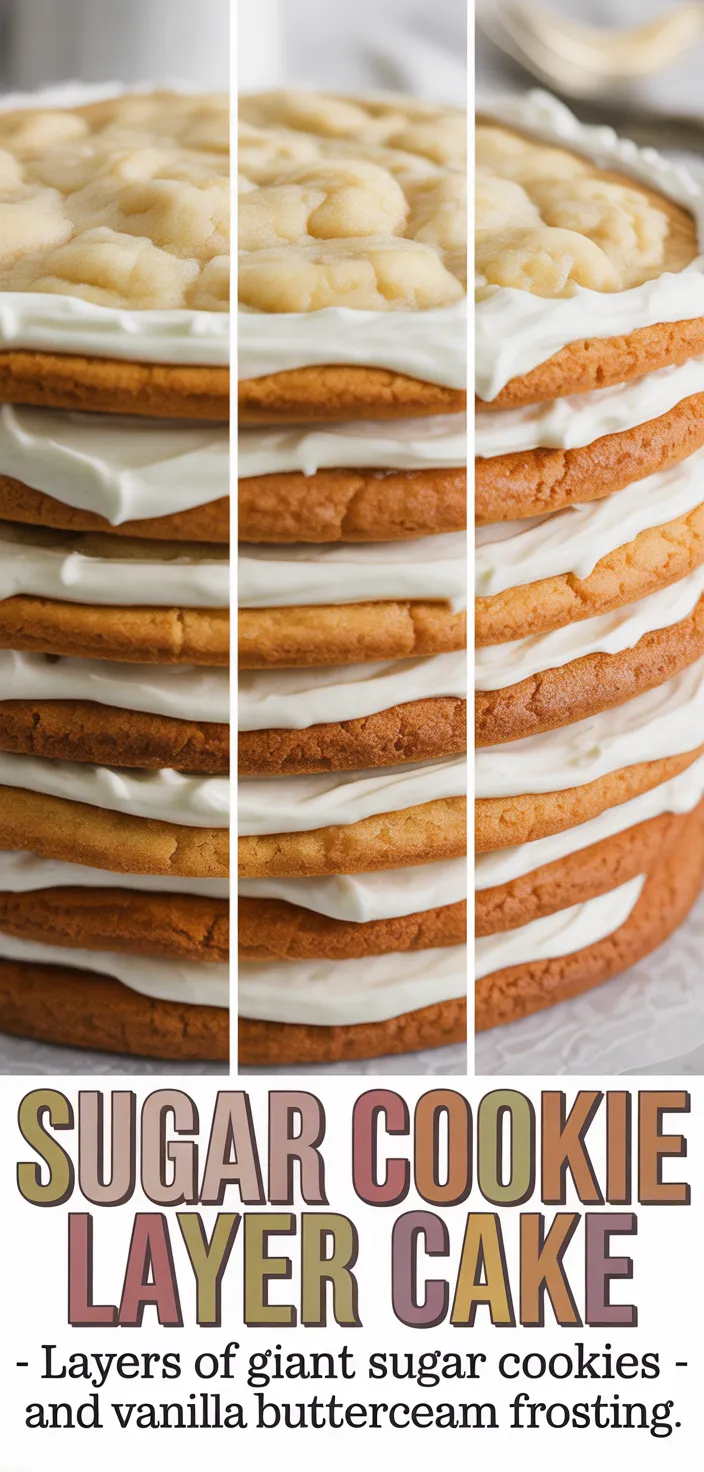
I know it sounds goofy, but when I first stacked those giant sugar cookies with a ridiculous amount of vanilla buttercream I thought, whoa. This Cookie Cake looks like it should be impossible to eat neatly, and that’s half the fun.
The richness from unsalted butter gives each bite a buttery snap, while a hit of vanilla extract in the frosting keeps it from being cloying. People ask if it’s for a party or just to cause a scene, and honestly I made it because I wanted something loud on the table.
It’s messy, a little proud, and somehow exactly what I wanted.
Ingredients
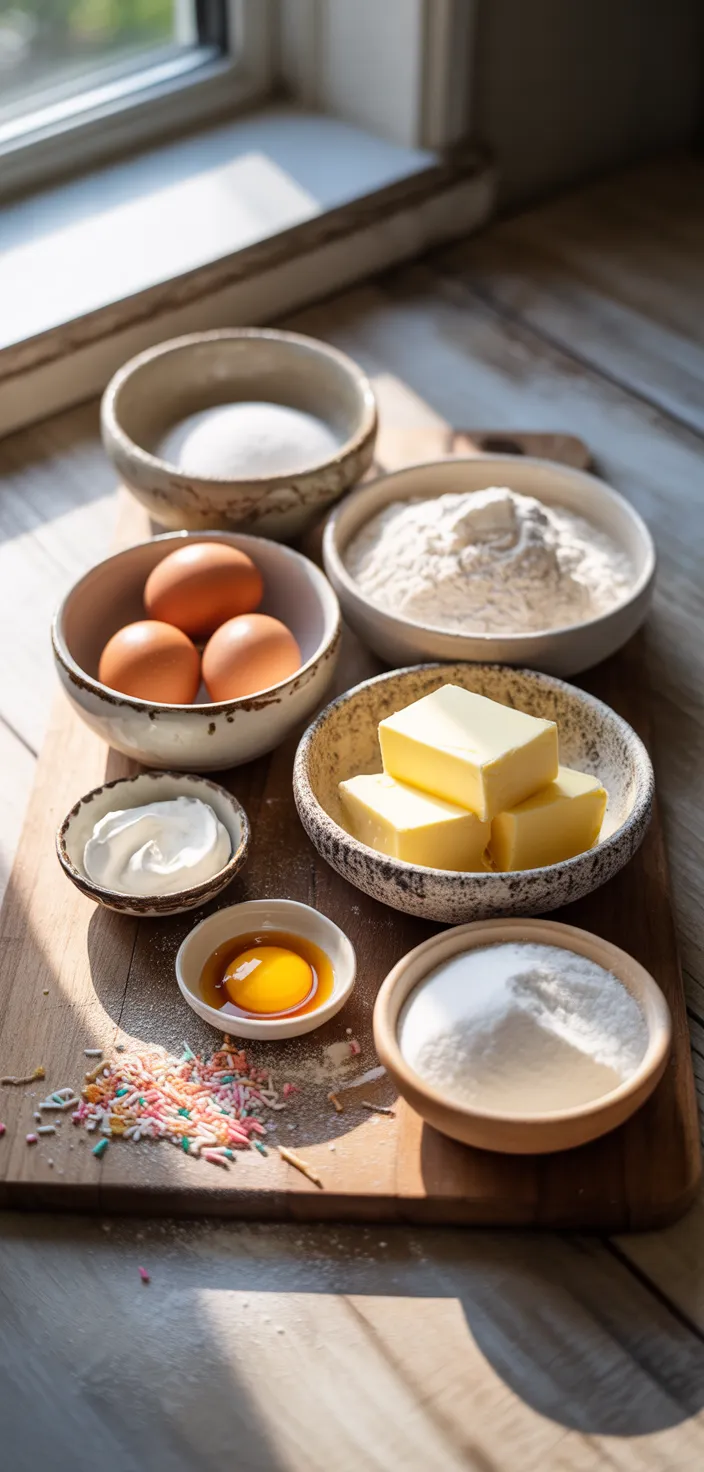
- All purpose flour gives structure, mostly carbs, little fibre, not many vitamins.
- Butter adds richness and fat, mostly saturated fat, makes cake tender and rich.
- Sugar makes it sweet, pure carbs, no nutrients, quick energy that fades.
- Eggs add protein, moisture and structure, yolks give richness and color.
- Sour cream gives tang, tender crumb, some calcium and protein, slightly sour.
- Vanilla adds aroma and warmth, no calories in small amounts but flavorful.
- Powdered sugar makes frosting smooth and sweet, mostly carbs, very calorie dense.
- Sprinkles add crunch and color, mostly artificial ingredients and extra sugar.
Ingredient Quantities
- 3 1/2 cups (440 g) all-purpose flour
- 1 teaspoon baking powder
- 1/2 teaspoon baking soda
- 1 teaspoon fine sea salt
- 1 cup (2 sticks, 226 g) unsalted butter softened
- 1 1/2 cups (300 g) granulated sugar
- 2 large eggs, room temp
- 2 teaspoons vanilla extract
- 1/4 cup (60 g) sour cream or plain yogurt
- 1 cup (2 sticks, 226 g) unsalted butter softened for the frosting
- 4 cups (480 g) powdered sugar, sifted
- 2 teaspoons vanilla extract for the frosting
- 2 to 4 tablespoons heavy cream or whole milk
- 1/4 teaspoon fine sea salt (a pinch)
- Sprinkles or sanding sugar (optional)
How to Make this
1. Preheat oven to 350°F (175°C). Grease and line two 8 or 9 inch round cake pans with parchment, or use three pans for thinner layers; set aside.
2. In a medium bowl whisk 3 1/2 cups (440 g) all purpose flour, 1 teaspoon baking powder, 1/2 teaspoon baking soda and 1 teaspoon fine sea salt so it’s evenly mixed.
3. In a large bowl cream 1 cup (226 g) softened unsalted butter with 1 1/2 cups (300 g) granulated sugar until light and fluffy, about 2 to 3 minutes. Beat in 2 large room temp eggs one at a time, then stir in 2 teaspoons vanilla and 1/4 cup (60 g) sour cream or plain yogurt. Don’t over work it.
4. Add the dry ingredients to the wet in two additions, mixing until just combined and you have a soft, slightly tacky dough. Scrape the bowl so nothing’s left behind.
5. Divide dough evenly between your prepared pans (or roll into three balls and press into pans), pressing it flat and up to the edges so each layer is even. Smooth the tops with a spatula. Chill the filled pans in the fridge 15 to 30 minutes if your kitchen is warm or the dough feels soft, that helps prevent spreading.
6. Bake 12 to 18 minutes depending on pan size and thickness, until edges are set and tops are pale golden, a toothpick should come out with a few moist crumbs. Do not overbake or the layers will get dry. Let them cool in the pans 10 minutes, then invert onto a wire rack and cool completely.
7. Make the vanilla buttercream: beat 1 cup (226 g) softened unsalted butter until creamy, then gradually add 4 cups (480 g) sifted powdered sugar, 1/4 teaspoon fine sea salt, and 2 teaspoons vanilla. Add 2 to 4 tablespoons heavy cream or whole milk until the frosting is smooth and spreadable, beat 2 to 3 minutes more until light and fluffy. Taste and adjust salt or cream if needed.
8. If the cookie layers have domes, trim them level with a serrated knife so they stack flat. Place one layer on your serving plate, spread a thick even layer of buttercream, repeat with the remaining layers, then apply a thin crumb coat and chill 15 minutes to set.
9. Finish frosting with the remaining buttercream, smooth with an offset spatula (dip in hot water and dry first for silky sides), sprinkle with sanding sugar or sprinkles if you like, chill briefly to set, then slice and serve. Keep leftovers covered in the fridge.
Equipment Needed
1. Oven preheated to 350 F (175 C)
2. Two 8 or 9 inch round cake pans, or three smaller pans if you want thinner layers
3. Parchment paper and butter or baking spray to grease the pans
4. One medium bowl and one large bowl for dry and wet mixes
5. Electric mixer, hand or stand, or a sturdy wooden spoon if you must
6. Measuring cups and spoons plus a kitchen scale for exact flour amounts
7. Whisk for the dry ingredients and a rubber spatula to scrape the bowl
8. Sifter or fine mesh sieve for powdered sugar and aerating flour
9. Wire cooling rack and a serrated knife to level domes, plus an offset spatula for smooth frosting
10. Toothpicks for doneness testing, and a refrigerator or fridge space to chill layers when needed
Dont forget little things like extra bowls and clean towels, youll thank me later.
FAQ
Sugar Cookie Layer Cake Recipe Substitutions and Variations
- All-purpose flour: swap for cake flour if you want a softer, more tender crumb. To make cake flour at home, for each cup remove 2 tbsp AP and add 2 tbsp cornstarch, sift before measuring; or use a 1:1 gluten-free all-purpose blend by weight if you need gluten free.
- Sour cream or plain yogurt: use an equal amount of buttermilk, or make soured milk by stirring 1 tsp lemon juice or vinegar into 1/4 cup milk and letting it sit 5 minutes, it’s a fine stand-in.
- Unsalted butter (frosting): for dairy free try a vegan stick butter 1:1, or for a firmer, more stable frosting replace up to half the butter with vegetable shortening, it’ll hold shape better but taste slightly different.
- Heavy cream or whole milk: use half and half for a richer, creamier frosting, or mimic heavy cream by adding 1 tbsp melted butter to each cup of whole milk if thats what you have on hand.
Pro Tips
– Use a scale if you can, flour is sneaky. If you dont have one spoon the flour into the cup and level it with a knife, scooping straight from the bag will make the layers heavy and dry.
– Bring butter and eggs to room temp so they blend faster, but dont go crazy beating. Stop mixing as soon as the dry stuff is just incorporated, otherwise the crumb gets tough and dense.
– Chill the filled pans briefly if the batter feels soft or your kitchen is warm, it helps keep them from spreading. If you get a dome on top, wait until they are fully cool before trimming, a serrated knife with slow saws gives the cleanest edges.
– For super smooth, not greasy frosting add cream a teaspoon at a time and whip it well so it gets light and fluffy, taste and add a pinch more salt if it seems too sweet. For picture-perfect sides dip your spatula in hot water, dry it, then smooth, repeat till it’s right.
Sugar Cookie Layer Cake Recipe
My favorite Sugar Cookie Layer Cake Recipe
Equipment Needed:
1. Oven preheated to 350 F (175 C)
2. Two 8 or 9 inch round cake pans, or three smaller pans if you want thinner layers
3. Parchment paper and butter or baking spray to grease the pans
4. One medium bowl and one large bowl for dry and wet mixes
5. Electric mixer, hand or stand, or a sturdy wooden spoon if you must
6. Measuring cups and spoons plus a kitchen scale for exact flour amounts
7. Whisk for the dry ingredients and a rubber spatula to scrape the bowl
8. Sifter or fine mesh sieve for powdered sugar and aerating flour
9. Wire cooling rack and a serrated knife to level domes, plus an offset spatula for smooth frosting
10. Toothpicks for doneness testing, and a refrigerator or fridge space to chill layers when needed
Dont forget little things like extra bowls and clean towels, youll thank me later.
Ingredients:
- 3 1/2 cups (440 g) all-purpose flour
- 1 teaspoon baking powder
- 1/2 teaspoon baking soda
- 1 teaspoon fine sea salt
- 1 cup (2 sticks, 226 g) unsalted butter softened
- 1 1/2 cups (300 g) granulated sugar
- 2 large eggs, room temp
- 2 teaspoons vanilla extract
- 1/4 cup (60 g) sour cream or plain yogurt
- 1 cup (2 sticks, 226 g) unsalted butter softened for the frosting
- 4 cups (480 g) powdered sugar, sifted
- 2 teaspoons vanilla extract for the frosting
- 2 to 4 tablespoons heavy cream or whole milk
- 1/4 teaspoon fine sea salt (a pinch)
- Sprinkles or sanding sugar (optional)
Instructions:
1. Preheat oven to 350°F (175°C). Grease and line two 8 or 9 inch round cake pans with parchment, or use three pans for thinner layers; set aside.
2. In a medium bowl whisk 3 1/2 cups (440 g) all purpose flour, 1 teaspoon baking powder, 1/2 teaspoon baking soda and 1 teaspoon fine sea salt so it’s evenly mixed.
3. In a large bowl cream 1 cup (226 g) softened unsalted butter with 1 1/2 cups (300 g) granulated sugar until light and fluffy, about 2 to 3 minutes. Beat in 2 large room temp eggs one at a time, then stir in 2 teaspoons vanilla and 1/4 cup (60 g) sour cream or plain yogurt. Don’t over work it.
4. Add the dry ingredients to the wet in two additions, mixing until just combined and you have a soft, slightly tacky dough. Scrape the bowl so nothing’s left behind.
5. Divide dough evenly between your prepared pans (or roll into three balls and press into pans), pressing it flat and up to the edges so each layer is even. Smooth the tops with a spatula. Chill the filled pans in the fridge 15 to 30 minutes if your kitchen is warm or the dough feels soft, that helps prevent spreading.
6. Bake 12 to 18 minutes depending on pan size and thickness, until edges are set and tops are pale golden, a toothpick should come out with a few moist crumbs. Do not overbake or the layers will get dry. Let them cool in the pans 10 minutes, then invert onto a wire rack and cool completely.
7. Make the vanilla buttercream: beat 1 cup (226 g) softened unsalted butter until creamy, then gradually add 4 cups (480 g) sifted powdered sugar, 1/4 teaspoon fine sea salt, and 2 teaspoons vanilla. Add 2 to 4 tablespoons heavy cream or whole milk until the frosting is smooth and spreadable, beat 2 to 3 minutes more until light and fluffy. Taste and adjust salt or cream if needed.
8. If the cookie layers have domes, trim them level with a serrated knife so they stack flat. Place one layer on your serving plate, spread a thick even layer of buttercream, repeat with the remaining layers, then apply a thin crumb coat and chill 15 minutes to set.
9. Finish frosting with the remaining buttercream, smooth with an offset spatula (dip in hot water and dry first for silky sides), sprinkle with sanding sugar or sprinkles if you like, chill briefly to set, then slice and serve. Keep leftovers covered in the fridge.