
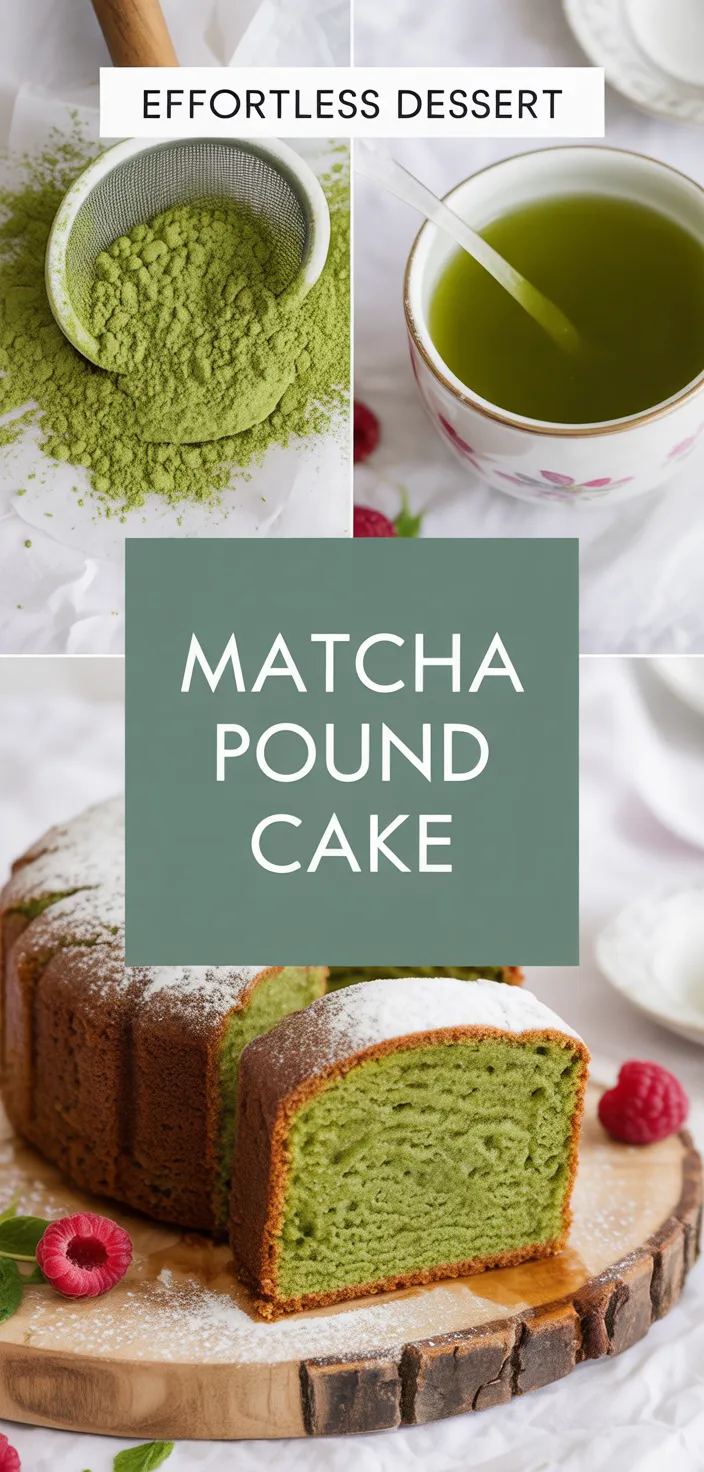
I am obsessed with this Japanese matcha pound cake because the matcha green tea powder sings without being cloying. I love how the crumb stays dense and moist thanks to unsalted butter and a restrained sweetness that lets the tea do the speaking.
It feels elegant without showing off. And every slice looks like it belongs in a quiet bakery window, all that vivid green demanding a second bite.
But it’s not precious or fussy. It hits that calm, insistent green-tea note that I crave when I want something grown-up and unfussy.
Pure, green, and impossible to resist right now.
Ingredients
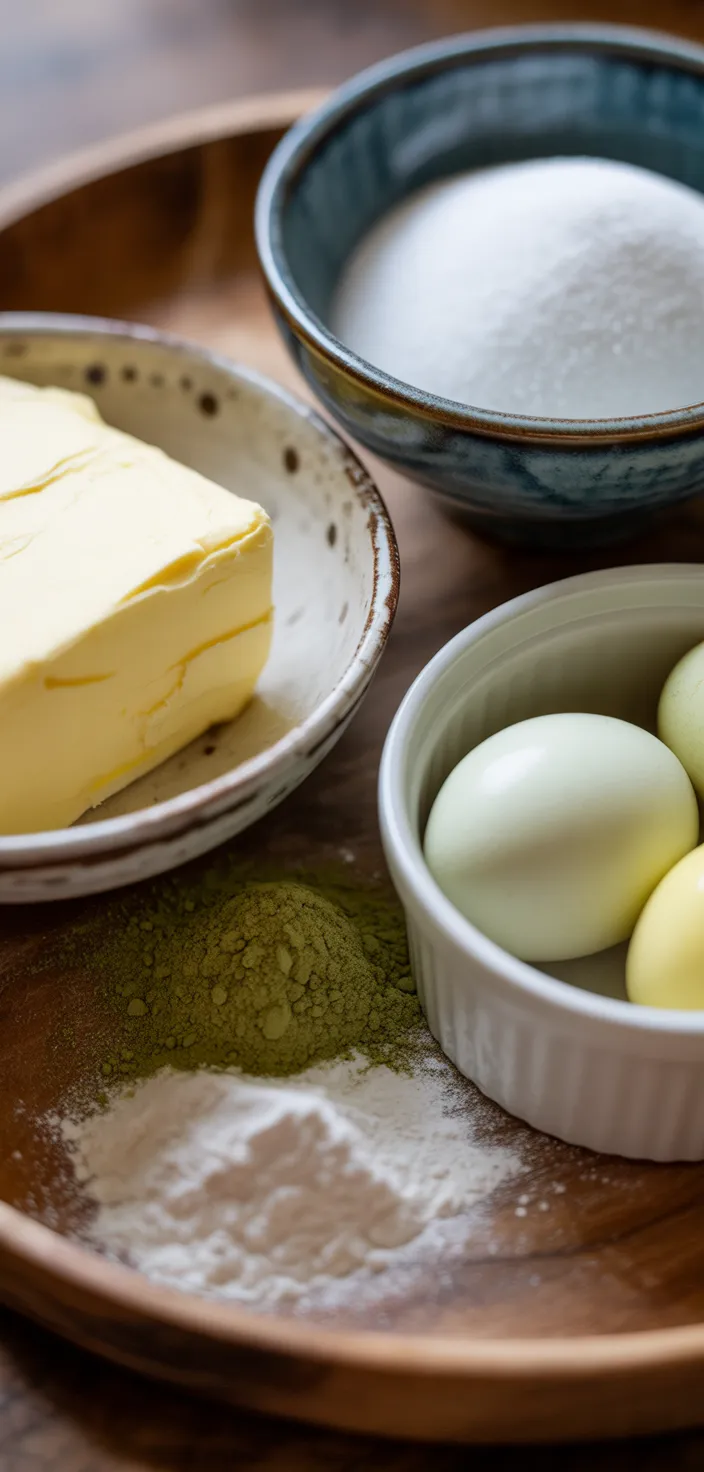
- Buttery backbone, keeps cake tender and rich.
Plus it browns the crust.
- Sweetness that cuts matcha’s bitterness.
Basically makes it feel like dessert.
- Gives structure and lift.
Plus adds moisture and custardy feel.
- Soft crumb, lighter than regular flour.
Basically makes slices melt in mouth.
- Earthy, grassy note without being overpowering.
Plus that pretty green color.
- Tiny lift so cake isn’t dense.
Basically helps it rise evenly.
- Balances sweetness and deepens flavor.
Plus it wakes up the matcha.
- Adds silkiness and hydrates batter.
Basically softens the crumb a touch.
- Warm background note, rounds flavors.
Plus makes it taste homier.
Ingredient Quantities
- Unsalted butter, softened, 200 grams
- Granulated sugar, 150 grams
- Large eggs, 3
- Cake flour, 180 grams
- Matcha green tea powder, 2 tablespoons (about 10 to 12 grams)
- Baking powder, 1 teaspoon
- Salt, 1/4 teaspoon
- Whole milk, 2 tablespoons
- Pure vanilla extract, 1 teaspoon
How to Make this
1. Preheat the oven to 170 degrees Celsius. Grease and line a 22 to 24 cm loaf pan with parchment paper.
2. Sift together 180 g cake flour, 2 tablespoons (10 to 12 g) matcha powder, 1 teaspoon baking powder, and 1/4 teaspoon salt into a bowl.
3. In a large bowl, cream 200 g softened unsalted butter with 150 g granulated sugar until light and fluffy, about 3 to 5 minutes.
4. Add the 3 large eggs one at a time, beating well after each addition until fully incorporated. Mix in 1 teaspoon pure vanilla extract.
5. With the mixer on low, add the sifted dry ingredients in three additions alternately with 2 tablespoons whole milk, beginning and ending with the dry ingredients. Mix just until combined; do not overmix.
6. Scrape the batter into the prepared loaf pan and smooth the top evenly.
7. Bake at 170 degrees Celsius for 45 to 55 minutes, or until a skewer inserted into the center comes out clean or with a few moist crumbs.
8. Remove the cake from the oven and let it cool in the pan for 10 minutes.
9. Lift the cake out using the parchment paper and transfer to a wire rack to cool completely before slicing and serving.
Equipment Needed
1. Oven
2. 22 to 24 cm loaf pan
3. Parchment paper
4. Mixing bowls (one large)
5. Electric mixer (hand or stand)
6. Sieve or flour sifter
7. Digital kitchen scale and measuring spoons
8. Rubber spatula
9. Whisk
10. Wire cooling rack and a skewer or toothpick
FAQ
Japanese Matcha Pound Cake With Subtle Sweetness Recipe Substitutions and Variations
- Unsalted butter: swap with salted butter (omit the recipe salt) or use 200 grams vegan/baking margarine 1:1 for a dairy-free option; coconut oil works too at 180 to 200 grams but expect a faint coconut note.
- Granulated sugar: replace with 150 grams caster sugar for a finer crumb, or 150 grams light brown sugar to add moisture and a caramel note (slightly deeper flavor).
- Cake flour: if unavailable, make a substitute using all-purpose flour by weight but lighten it with cornstarch – for each 120 grams all-purpose remove 16 grams (about 2 tbsp) and add 16 grams cornstarch; or use pastry flour 1:1.
- Whole milk: swap with the same weight/volume of unsweetened soy or almond milk for dairy-free baking, or use 2 tablespoons buttermilk for a touch of tang and a slightly more tender crumb.
Pro Tips
1. Use a digital scale for your flour and matcha. Cake flour packs differently and matcha doses are small, so weighing keeps texture and color consistent every time.
2. Bring eggs and butter to room temperature before you start. They emulsify more easily, which gives a silkier batter and a finer crumb.
3. Fold with care and stop as soon as the dry ingredients disappear. Overworking develops whatever gluten is left in cake flour and can make the loaf dense.
4. Check doneness with a skewer near the center and also by gently pressing the top. If it springs back lightly and the skewer has only a few moist crumbs, it is done. Letting the cake rest in the pan for the first 10 minutes helps it hold together when you remove it.
5. For a brighter matcha flavor, sift the matcha with the flour and consider tasting a tiny pinch of your matcha first; if it tastes flat, try a slightly fresher batch next time. Store leftovers wrapped at room temperature for up to two days or in the fridge up to five, but bring back to room temperature before serving for best texture.
8
servings
369
kcal
Equipment: 1. Oven
2. 22 to 24 cm loaf pan
3. Parchment paper
4. Mixing bowls (one large)
5. Electric mixer (hand or stand)
6. Sieve or flour sifter
7. Digital kitchen scale and measuring spoons
8. Rubber spatula
9. Whisk
10. Wire cooling rack and a skewer or toothpick
Ingredients
-
Unsalted butter, softened, 200 grams
-
Granulated sugar, 150 grams
-
Large eggs, 3
-
Cake flour, 180 grams
-
Matcha green tea powder, 2 tablespoons (about 10 to 12 grams)
-
Baking powder, 1 teaspoon
-
Salt, 1/4 teaspoon
-
Whole milk, 2 tablespoons
-
Pure vanilla extract, 1 teaspoon
Directions
- Preheat the oven to 170 degrees Celsius. Grease and line a 22 to 24 cm loaf pan with parchment paper.
- Sift together 180 g cake flour, 2 tablespoons (10 to 12 g) matcha powder, 1 teaspoon baking powder, and 1/4 teaspoon salt into a bowl.
- In a large bowl, cream 200 g softened unsalted butter with 150 g granulated sugar until light and fluffy, about 3 to 5 minutes.
- Add the 3 large eggs one at a time, beating well after each addition until fully incorporated. Mix in 1 teaspoon pure vanilla extract.
- With the mixer on low, add the sifted dry ingredients in three additions alternately with 2 tablespoons whole milk, beginning and ending with the dry ingredients. Mix just until combined; do not overmix.
- Scrape the batter into the prepared loaf pan and smooth the top evenly.
- Bake at 170 degrees Celsius for 45 to 55 minutes, or until a skewer inserted into the center comes out clean or with a few moist crumbs.
- Remove the cake from the oven and let it cool in the pan for 10 minutes.
- Lift the cake out using the parchment paper and transfer to a wire rack to cool completely before slicing and serving.
Notes
- Below you’ll find my best estimate of this recipe’s nutrition facts. Treat the numbers as a guide rather than a rule—great food should nourish both body and spirit. Figures are approximate, and the website owner assumes no liability for any inaccuracies in this recipe.
Nutrition Facts
- Serving Size: 90.1g
- Total number of serves: 8
- Calories: 369kcal
- Fat: 22.5g
- Saturated Fat: 13.5g
- Trans Fat: 0.31g
- Polyunsaturated: 0.93g
- Monounsaturated: 5.7g
- Cholesterol: 123.5mg
- Sodium: 165mg
- Potassium: 70mg
- Carbohydrates: 36.4g
- Fiber: 0.7g
- Sugar: 19.1g
- Protein: 4.5g
- Vitamin A: 375IU
- Vitamin C: 0mg
- Calcium: 26mg
- Iron: 0.48mg