
I unveiled a birthday cake that slices into glossy, jewel-toned layers and leaves everyone speechless, desperate to know how one cake could taste so unexpectedly complex.
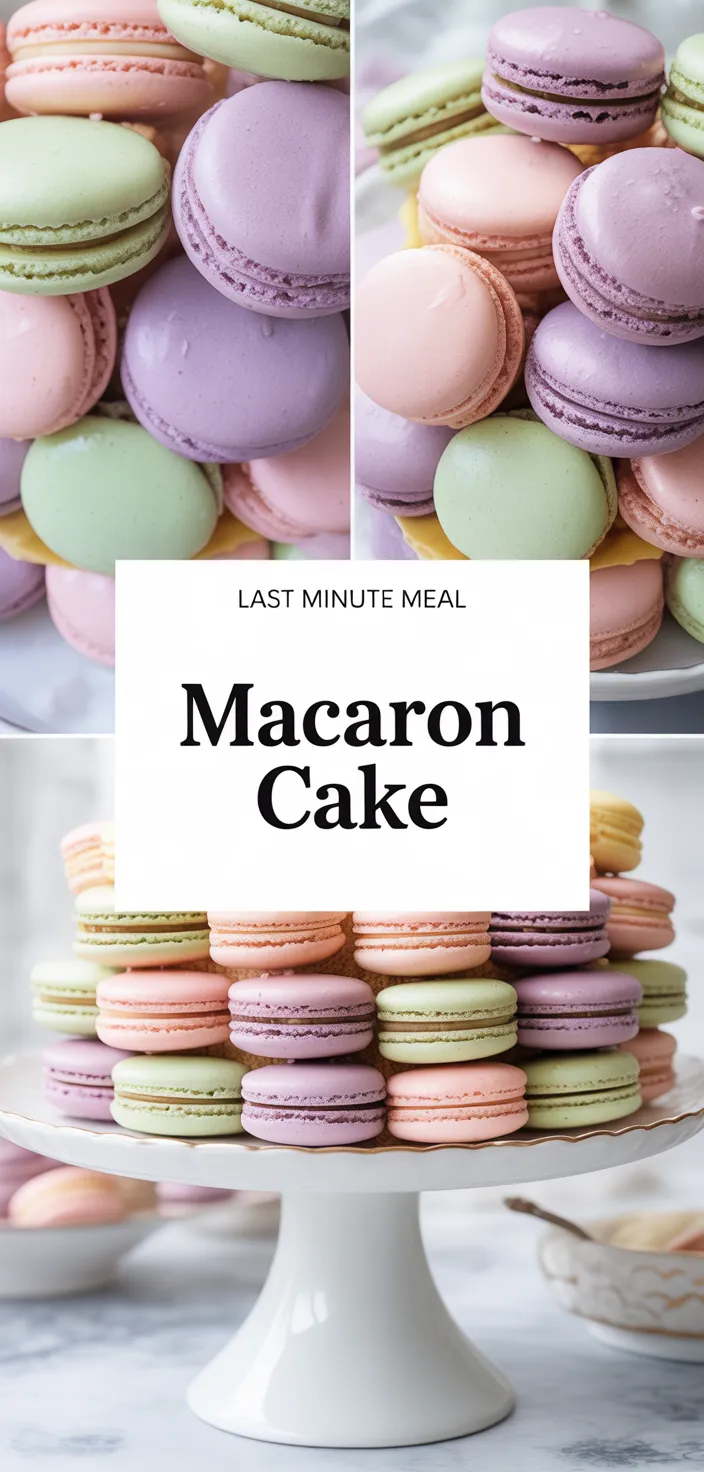
I’m obsessed with this macaron cake because it hits stubborn sweet spots: crisp macaron shells giving way to pillowy buttercream layers, tiny jewels on a celebration table. Almond flour brings that nutty, delicate backbone I crave, and Unsalted butter gives the buttercream a clean, silky mouthfeel that keeps every bite from feeling too sweet.
I love the visual chaos of pastel minis scattered on a structured cake. And the contrast between fragile shells and dense sponge is downright addictive.
Not precious, just seriously delicious party drama. Pure, loud, dessert-forward joy.
Bring it to a birthday and watch jaws drop instantly.
Ingredients
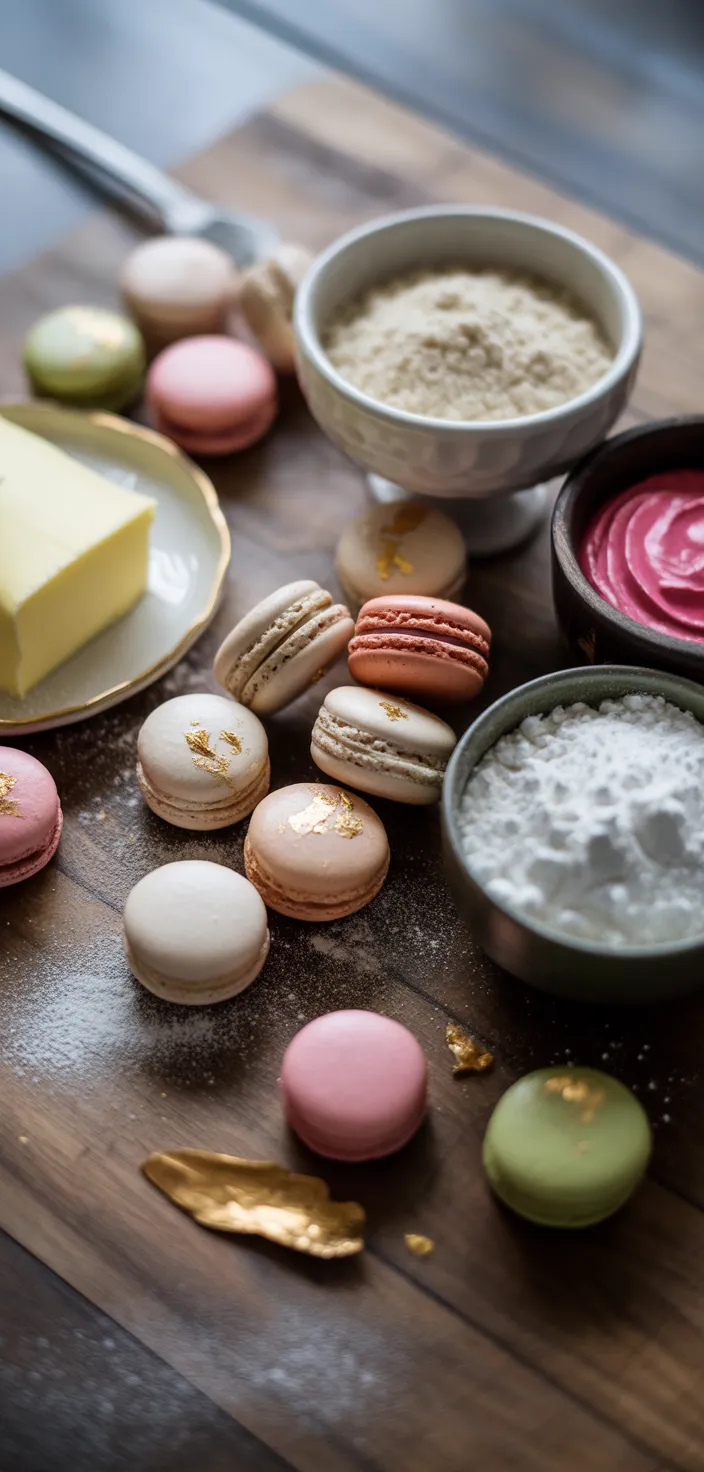
- Almond flour: nutty texture, gives shells that tender chew and subtle almond taste.
- Powdered sugar (shells): superfine sweetness, helps smooth the macaron surface.
- Egg whites: airy lift and structure, they’re the shell’s backbone.
- Granulated sugar: stabilizes the meringue, adds snap to the shell.
- Cream of tartar: keeps meringue steady.
Basically, it stops weeping.
- Vanilla extract (shells): warm background flavor, nothing too shouty.
- Gel food coloring: bold color without watering down batter.
- Unsalted butter (buttercream): rich, creamy base that makes the filling luscious.
- Powdered sugar (buttercream): sweetens and firms the buttercream’s texture.
- Heavy cream: loosens the buttercream, makes it silky and spreadable.
- Salt (buttercream): balances sweetness.
Plus, it sharpens the flavor.
- All purpose flour: gives the sponge cake its soft, bouncy crumb.
- Caster or granulated sugar (sponge): sweetens and helps the sponge rise.
- Unsalted butter (sponge): adds richness and tender crumb to the cake.
- Eggs (sponge): structure and moisture, they make the cake fluffy.
- Baking powder: lifts the sponge so it isn’t dense.
- Milk: moistens batter, keeps sponge fine textured.
- Vanilla extract (sponge): cozy flavor that ties the cake together.
- Salt (sponge): brings out the batter’s flavors, subtle but necessary.
- Simple syrup: adds moisture.
Basically, it keeps the layers perfect.
- Mini macarons: cute decorations, extra crunch and color on top.
- Edible gold leaf or sprinkles: fancy sparkle or fun texture, your call.
Ingredient Quantities
- Almond flour 300 g (finely ground, sifted)
- Powdered sugar 300 g (confectioners sugar)
- Egg whites 120 g (about 4 large, room temp)
- Granulated sugar 150 g
- Cream of tartar 1/4 teaspoon (or 1 teaspoon lemon juice)
- Pure vanilla extract 1 teaspoon
- Gel food coloring, assorted, as needed
- Unsalted butter 340 g (for buttercream, softened)
- Powdered sugar 600 g (for buttercream)
- Heavy cream 60 80 ml (about 1/4 cup to 1/3 cup, for buttercream)
- Salt pinch (for buttercream)
- All purpose flour 200 g (for sponge cake layers)
- Caster sugar or granulated sugar 200 g (for sponge)
- Unsalted butter 200 g (melted or softened for sponge)
- Eggs 4 large (for sponge)
- Baking powder 2 teaspoons (for sponge)
- Milk 120 ml (for sponge)
- Vanilla extract 2 teaspoons (for sponge)
- Salt 1/4 teaspoon (for sponge)
- Simple syrup 80 100 ml (optional, for brushing cake layers)
- Mini macarons 30 40 (pre-made or from the shell batch for decorating)
- Edible gold leaf or sprinkles, optional, to decorate
How to Make this
1. Preheat oven to 180°C for the sponge cake; line and grease two 20 cm cake pans. Sift 200 g all purpose flour with 2 teaspoons baking powder and 1/4 teaspoon salt, set aside.
2. Make the sponge: whisk 4 eggs with 200 g caster sugar until pale and thick, about 5 minutes with a mixer. Fold in the sifted flour gently, then add 200 g melted or softened unsalted butter, 120 ml milk and 2 teaspoons vanilla extract, fold until combined but don’t overmix. Divide batter between pans and bake 25 to 30 minutes or until a skewer comes out clean. Cool on a rack.
3. While sponge bakes, prepare macaron shells: sift together 300 g almond flour and 300 g powdered sugar into a bowl. In a separate clean bowl whip 120 g room temperature egg whites with 1/4 teaspoon cream of tartar until foamy, then gradually add 150 g granulated sugar and whip to stiff glossy peaks; add 1 teaspoon vanilla extract at the end and split meringue into bowls to add gel food coloring if you like.
4. Make the macaron batter by folding the dry mix into the meringue using a spatula with the macaronage technique: press and fold until batter flows in ribbons and can fall back into the bowl in a figure eight without breaking. This usually takes 30 to 60 seconds; stop when it’s smooth and slightly runny but not soupy.
5. Pipe shells onto parchment or silicone mat in small 3 to 4 cm rounds for mini macarons, tap trays sharply to release air bubbles and let shells rest 20 to 40 minutes, until a skin forms and they are not sticky to touch. Preheat oven to 150°C. Bake 12 to 16 minutes, rotate trays halfway, then cool fully before removing.
6. Make buttercream: beat 340 g softened unsalted butter until light and creamy, gradually add 600 g powdered sugar in batches, add 60 to 80 ml heavy cream a little at a time to reach desired texture, add a pinch of salt and taste for balance. Beat until fluffy and smooth; color a portion if you want different shades.
7. Level sponge layers, optionally brush with 80 to 100 ml simple syrup to keep them moist. Spread a generous layer of buttercream between layers and stack. Crumb coat the assembled cake and chill 15 to 30 minutes to set.
8. Final coat the cake with remaining buttercream, smooth as best you can with an offset spatula or bench scraper. If you want a multi color effect, apply different colors in patches and smooth lightly for a rustic look.
9. Decorate: press 30 to 40 mini macarons around the top edge or randomly on the top, add edible gold leaf or sprinkles for glam, and tuck a few whole or halved macarons into the sides if you like. Save a few macarons on top for a focal point.
10. Chill briefly to set the decorations, then bring to room temperature before serving so buttercream is soft. Store in fridge up to 3 days, but bring to room temp 1 hour before eating for best flavor. Some tips: sift well to avoid gritty shells, avoid overmixing sponge, and don’t open the oven while macarons bake.
Equipment Needed
1. Two 20 cm round cake pans, greased and lined, for the sponge layers
2. Stand mixer or hand mixer with whisk and paddle attachments for sponge, meringue and buttercream
3. Digital kitchen scale and measuring spoons for accurate weights (v important for macarons)
4. Sifter or fine mesh sieve for flour, almond flour and powdered sugar
5. Large mixing bowls and a few small bowls for meringue color splits
6. Silicone spatula and an offset spatula for folding and frosting (one spatula for batter one for buttercream)
7. Piping bags plus a small round piping tip and parchment or silicone baking mats for the mini macaron shells
8. Baking trays, cooling rack and a bench scraper or cake scraper to level and smooth the cake
9. Pastry brush for simple syrup and a clean towel for tapping trays and keeping workspace tidy
FAQ
Macaron Cake Recipe Substitutions and Variations
- Almond flour: substitute with blanched almond meal (1:1) but pulse and sift if you can, it’s a bit coarser so shells may be a tad textured; for nut-free use sunflower seed flour (1:1) but note it can turn green when mixed with egg whites, so add a little lemon juice to stop that.
- Egg whites (for macaron shells): use aquafaba (chickpea liquid) 3 tbsp per egg white, whip just like whites but expect slightly different drying time; or use powdered egg whites rehydrated to match weight (120 g total).
- Unsalted butter (buttercream): swap with equal weight of European style butter for a richer flavor, or use half butter half vegetable shortening for a more stable frosting if it’ll sit out a long time.
- All purpose flour (sponge cake): you can use cake flour for a lighter crumb — replace 200 g AP with 200 g cake flour or make your own by removing 2 tbsp per cup of AP and adding 2 tbsp cornstarch, sift well.
Pro Tips
1) Weigh everything, seriously. Eyeing almond flour or powdered sugar will get you flat shells or a sloppy batter. Use a kitchen scale, sift the dry mix, and gently tap the cup to level before weighing. If your almond flour feels damp, spread it on a tray and dry in a warm oven for 5 minutes then cool.
2) Age or warm the egg whites. For the macaron meringue, room temp whites whip up faster and reach glossy peaks more reliably. If you forgot to bring them out, sit the sealed bowl of whites in warm water for 5 to 10 minutes. Also wipe your mixing bowl and whisk with white vinegar or lemon to remove grease, it ruins meringue.
3) Learn the macaronage rhythm, not a stopwatch. Fold until batter flows in ribbons and you can draw a figure eight that slowly closes but still holds shape for a second. If it spreads flat immediately its overmixed, fold in a few more dry spatula-strokes to tighten it slightly. If it barely moves, keep folding but dont overdo it. Pipe a few test shells first so you can adjust consistency.
4) Chill between steps and control humidity. Let piped shells form a good skin before baking, 20 to 40 minutes depending on humidity. After assembly, crumb coat and chill the cake 15 to 30 minutes so buttercream firms and you get a clean final coat. If your kitchen is humid, bake macarons on the lower side of the time and let them cool in the turned-off oven with door ajar for a few minutes to prevent weeping.
Macaron Cake Recipe
I unveiled a birthday cake that slices into glossy, jewel-toned layers and leaves everyone speechless, desperate to know how one cake could taste so unexpectedly complex.
12
servings
1117
kcal
Equipment: 1. Two 20 cm round cake pans, greased and lined, for the sponge layers
2. Stand mixer or hand mixer with whisk and paddle attachments for sponge, meringue and buttercream
3. Digital kitchen scale and measuring spoons for accurate weights (v important for macarons)
4. Sifter or fine mesh sieve for flour, almond flour and powdered sugar
5. Large mixing bowls and a few small bowls for meringue color splits
6. Silicone spatula and an offset spatula for folding and frosting (one spatula for batter one for buttercream)
7. Piping bags plus a small round piping tip and parchment or silicone baking mats for the mini macaron shells
8. Baking trays, cooling rack and a bench scraper or cake scraper to level and smooth the cake
9. Pastry brush for simple syrup and a clean towel for tapping trays and keeping workspace tidy
Ingredients
-
Almond flour 300 g (finely ground, sifted)
-
Powdered sugar 300 g (confectioners sugar)
-
Egg whites 120 g (about 4 large, room temp)
-
Granulated sugar 150 g
-
Cream of tartar 1/4 teaspoon (or 1 teaspoon lemon juice)
-
Pure vanilla extract 1 teaspoon
-
Gel food coloring, assorted, as needed
-
Unsalted butter 340 g (for buttercream, softened)
-
Powdered sugar 600 g (for buttercream)
-
Heavy cream 60 80 ml (about 1/4 cup to 1/3 cup, for buttercream)
-
Salt pinch (for buttercream)
-
All purpose flour 200 g (for sponge cake layers)
-
Caster sugar or granulated sugar 200 g (for sponge)
-
Unsalted butter 200 g (melted or softened for sponge)
-
Eggs 4 large (for sponge)
-
Baking powder 2 teaspoons (for sponge)
-
Milk 120 ml (for sponge)
-
Vanilla extract 2 teaspoons (for sponge)
-
Salt 1/4 teaspoon (for sponge)
-
Simple syrup 80 100 ml (optional, for brushing cake layers)
-
Mini macarons 30 40 (pre-made or from the shell batch for decorating)
-
Edible gold leaf or sprinkles, optional, to decorate
Directions
- Preheat oven to 180°C for the sponge cake; line and grease two 20 cm cake pans. Sift 200 g all purpose flour with 2 teaspoons baking powder and 1/4 teaspoon salt, set aside.
- Make the sponge: whisk 4 eggs with 200 g caster sugar until pale and thick, about 5 minutes with a mixer. Fold in the sifted flour gently, then add 200 g melted or softened unsalted butter, 120 ml milk and 2 teaspoons vanilla extract, fold until combined but don’t overmix. Divide batter between pans and bake 25 to 30 minutes or until a skewer comes out clean. Cool on a rack.
- While sponge bakes, prepare macaron shells: sift together 300 g almond flour and 300 g powdered sugar into a bowl. In a separate clean bowl whip 120 g room temperature egg whites with 1/4 teaspoon cream of tartar until foamy, then gradually add 150 g granulated sugar and whip to stiff glossy peaks; add 1 teaspoon vanilla extract at the end and split meringue into bowls to add gel food coloring if you like.
- Make the macaron batter by folding the dry mix into the meringue using a spatula with the macaronage technique: press and fold until batter flows in ribbons and can fall back into the bowl in a figure eight without breaking. This usually takes 30 to 60 seconds; stop when it’s smooth and slightly runny but not soupy.
- Pipe shells onto parchment or silicone mat in small 3 to 4 cm rounds for mini macarons, tap trays sharply to release air bubbles and let shells rest 20 to 40 minutes, until a skin forms and they are not sticky to touch. Preheat oven to 150°C. Bake 12 to 16 minutes, rotate trays halfway, then cool fully before removing.
- Make buttercream: beat 340 g softened unsalted butter until light and creamy, gradually add 600 g powdered sugar in batches, add 60 to 80 ml heavy cream a little at a time to reach desired texture, add a pinch of salt and taste for balance. Beat until fluffy and smooth; color a portion if you want different shades.
- Level sponge layers, optionally brush with 80 to 100 ml simple syrup to keep them moist. Spread a generous layer of buttercream between layers and stack. Crumb coat the assembled cake and chill 15 to 30 minutes to set.
- Final coat the cake with remaining buttercream, smooth as best you can with an offset spatula or bench scraper. If you want a multi color effect, apply different colors in patches and smooth lightly for a rustic look.
- Decorate: press 30 to 40 mini macarons around the top edge or randomly on the top, add edible gold leaf or sprinkles for glam, and tuck a few whole or halved macarons into the sides if you like. Save a few macarons on top for a focal point.
- Chill briefly to set the decorations, then bring to room temperature before serving so buttercream is soft. Store in fridge up to 3 days, but bring to room temp 1 hour before eating for best flavor. Some tips: sift well to avoid gritty shells, avoid overmixing sponge, and don’t open the oven while macarons bake.
Notes
- Below you’ll find my best estimate of this recipe’s nutrition facts. Treat the numbers as a guide rather than a rule—great food should nourish both body and spirit. Figures are approximate, and the website owner assumes no liability for any inaccuracies in this recipe.
Nutrition Facts
- Serving Size: 247.5g
- Total number of serves: 12
- Calories: 1117kcal
- Fat: 59.05g
- Saturated Fat: 27.87g
- Trans Fat: 0.08g
- Polyunsaturated: 5g
- Monounsaturated: 25g
- Cholesterol: 167mg
- Sodium: 125mg
- Potassium: 217mg
- Carbohydrates: 140.3g
- Fiber: 4.2g
- Sugar: 121.7g
- Protein: 12.1g
- Vitamin A: 1653IU
- Vitamin C: 0.5mg
- Calcium: 93mg
- Iron: 1.7mg